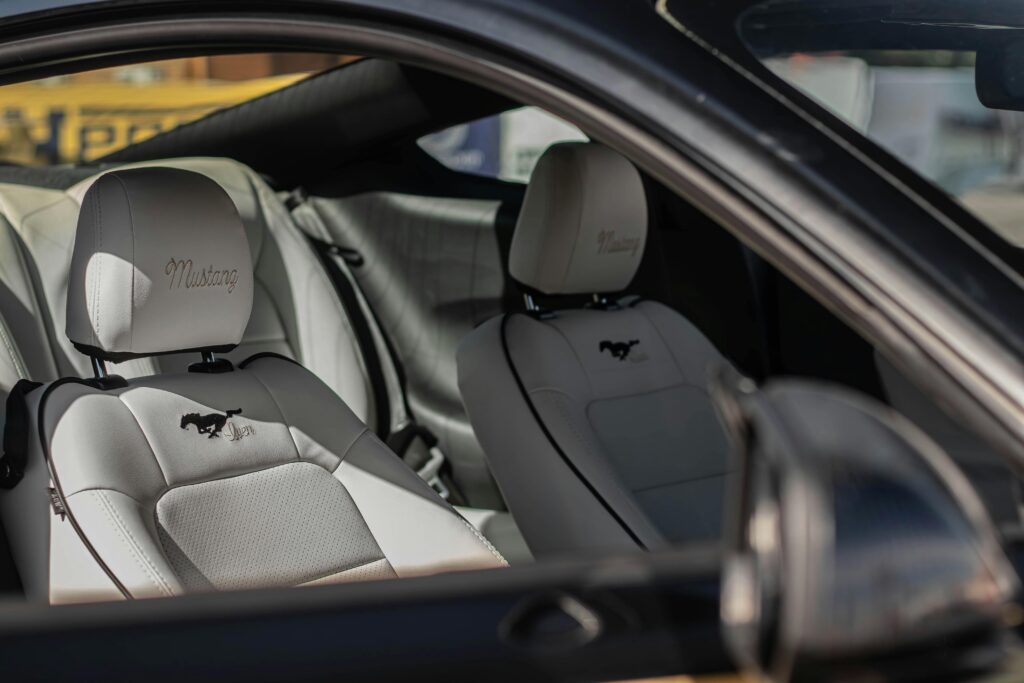
The Ford Mustang is the second most popular US import here in the UK. Historically, the most imported American car is the Chevrolet Corvette. Even so, and chiefly due to the UK model, there are far more Mustangs on the road.
The Mustang has been in continuous production in the US since 1964 and is Ford’s longest-running nameplate. There have been seven generations over the last 62 years, and that’s not including the electric 2021 Mustang Mach-E, which is built exclusively in Mexico and China. That one doesn’t count.
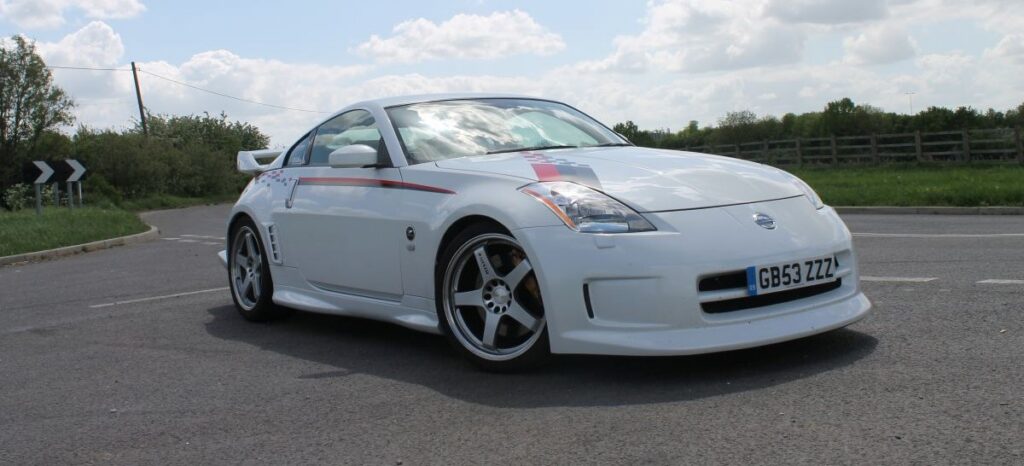
The Mustang was only officially made available in the UK in 2015 with the launch of the right-hand drive version of the sixth-generation (S550) model. To date, around 13,000 have been sold. All other UK Mustangs (estimated to be around 3,000) are grey imports.
To keep costs low, the original 1964 Mustang was built on the underpinnings of the second-generation Ford Falcon. Ford sold over 400,000 Mustangs in the US during its first year. It’s estimated that, since then, over 10 million Mustangs have been sold worldwide.
Mustangs may be known as muscle cars and are traditionally equipped with a naturally aspirated V8 engine… or at least a V6. But since 2015, they’ve also been available with a 2.3-litre Ford EcoBoost, the same engine that’s in the Focus ST and Ford Ranger. Even so, this isn’t the first factory-turbocharged engine seen in a Mustang; a 2.3-litre four-cylinder unit was fitted to the 1982 Mustang SVO.
With 15 years in production, from 1978-1993, the third-generation Mustang, known as the ‘Fox-body,’ is the longest-running model so far. This is arguably the most popular with modifiers and drag racers.
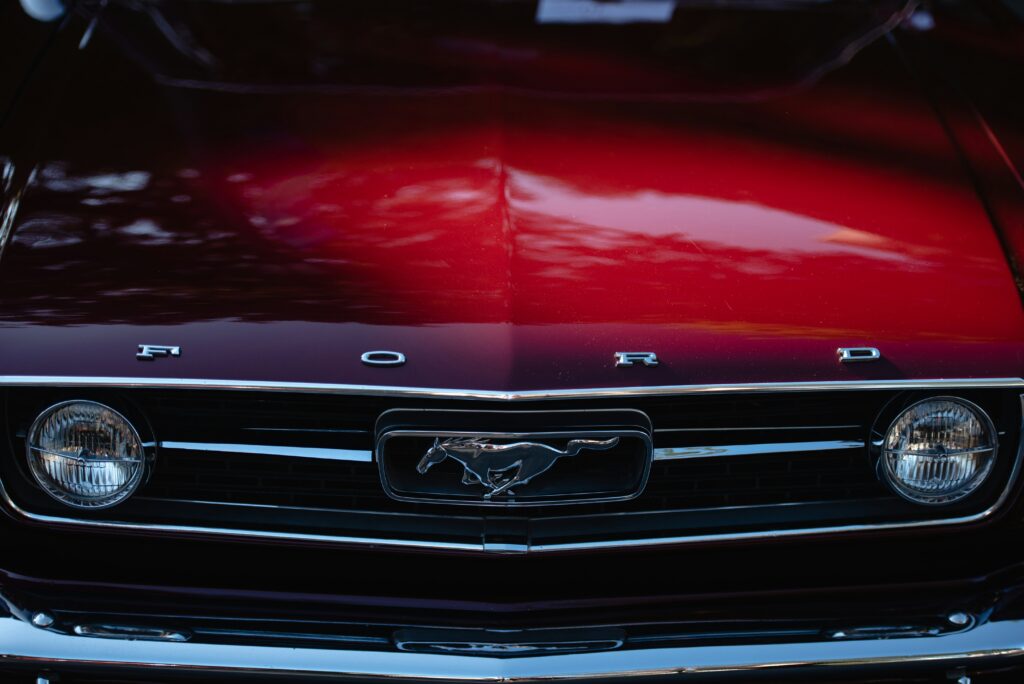
Even though the iconic emblem features one, the Mustang wasn’t named after the wild, free-roaming horses often found in the US. It was named after the P-51 Mustang fighter plane used in WWII… the plane was named after the horse.
It may be an American icon, largely put together in California, New Jersey, and Michigan, but in its lifetime, the Mustang has been produced in other Ford plants all over the world. This includes the Netherlands, Canada, Mexico, Peru, Venezuela, and even Australia.
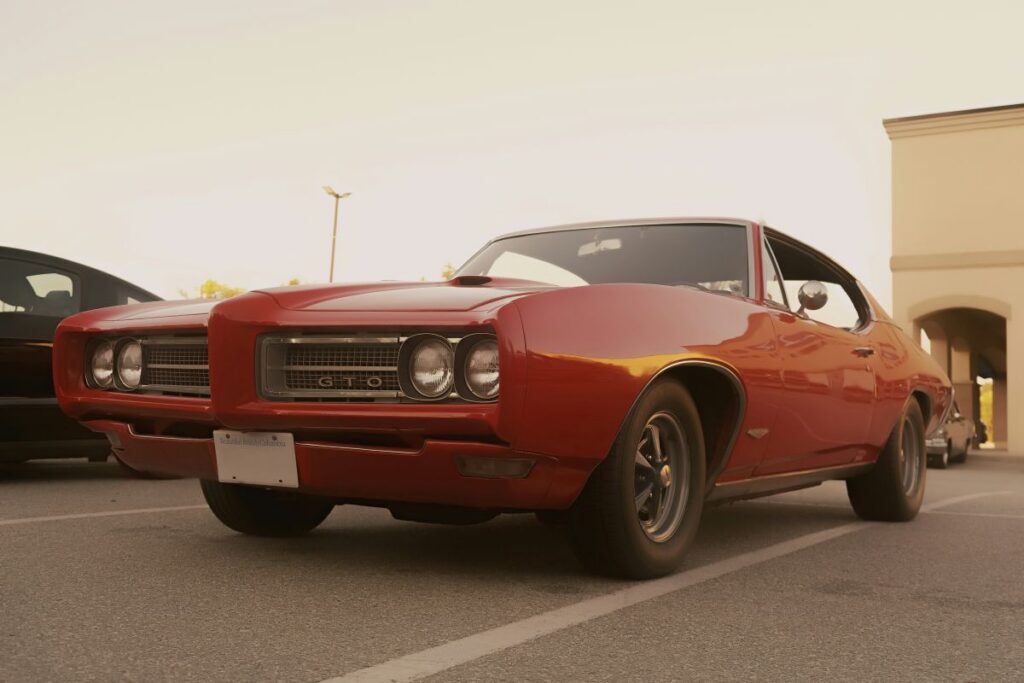
The original ‘pony car,’ meaning small, stylish, sporty and affordable, the Mustang inspired many others, including the Chevrolet Camaro, Dodge Challenger, and Pontiac Firebird.
As a direct consequence of the 1973 US oil crisis, the second-generation Mustang was designed to be smaller, lighter, and more efficient than the original.
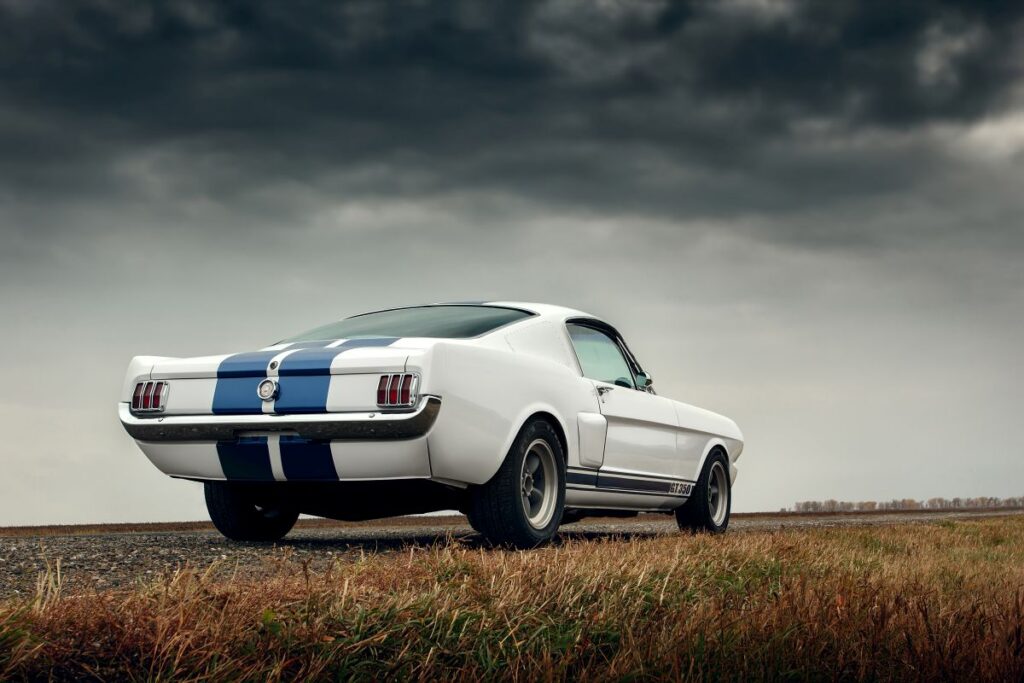
The Mustang was one of the first cars to be produced with multiple body styles right off the bat. The hardtop and convertible were available at launch, followed by a fastback three months later.
Perhaps the most famous – not to mention one of the most replicated – Mustangs in history is Eleanor, the Shelby GT500 driven by Nicolas Cage in Gone in Sixty Seconds. Ironically, the car wasn’t a genuine Shelby; it was a ‘67 Mustang Fastback modified to look like one.
The ‘Black and Gold’ (black paint with gold racing stripes) Hertz Shelby GT350H is seen as something of a collector’s holy grail. In the mid 1960s, Ford supplied Hertz with nearly 900 cars to add to their rental fleet before they were returned, refurbished, and sold to the public. The most sought-after are the first 85, which came with a manual gearbox and were advertised as ‘Rent-a-Racer’ cars. Some customers took that a bit too literally, using them as production-class cars in Sports Car Club of America (SCCA) races. Some were even returned with evidence of roll cages having been welded in.
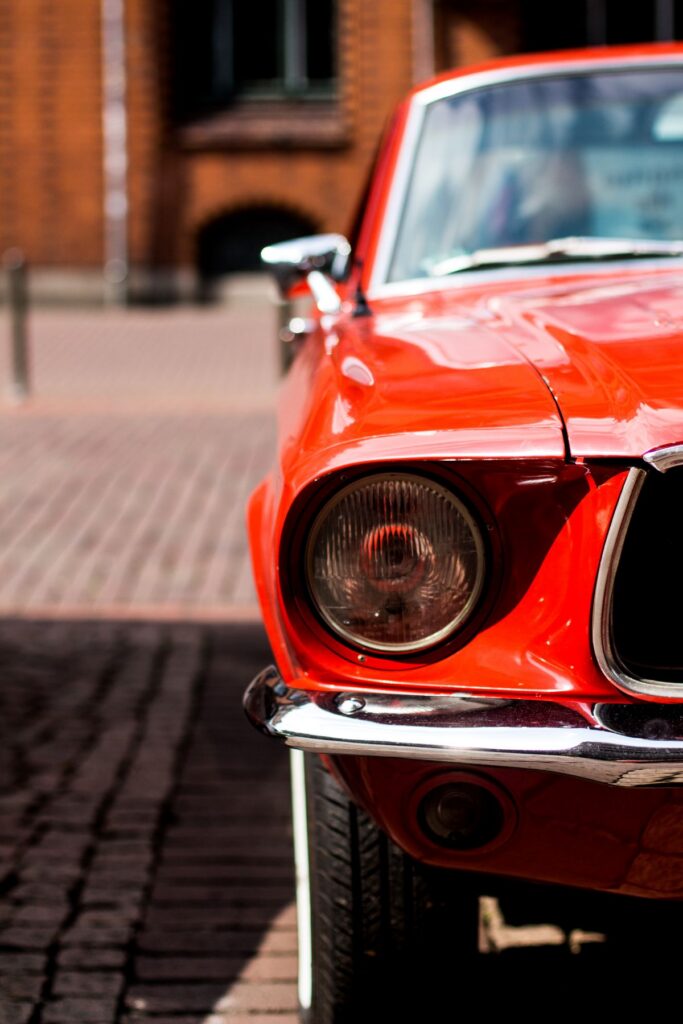
There’s still a huge debate about which of the four most famous Mustang V8s is the best. Is it the 289ci V8 used from 1965-1968, the 302/351ci Windsor V8s popular with drag racers, or the 5-litre Coyote V8 used in the modern era? Who knows?
The first-generation Mustang was priced at $2,368. In 2026, the base model starts at $32,320 – that’s around 14 times more.
The 2025 Mustang GTD is the most powerful Mustang ever built. This standard road car uses a supercharged 5.2-litre V8 to produce 815hp and can hit 202mph. With a time of 6:52.072, it’s also the first American production car to achieve a sub-seven-minute lap of the Nürburgring. Currently, it’s the eighth fastest production car ever, just half a second behind the Lamborghini Huracán Performante.