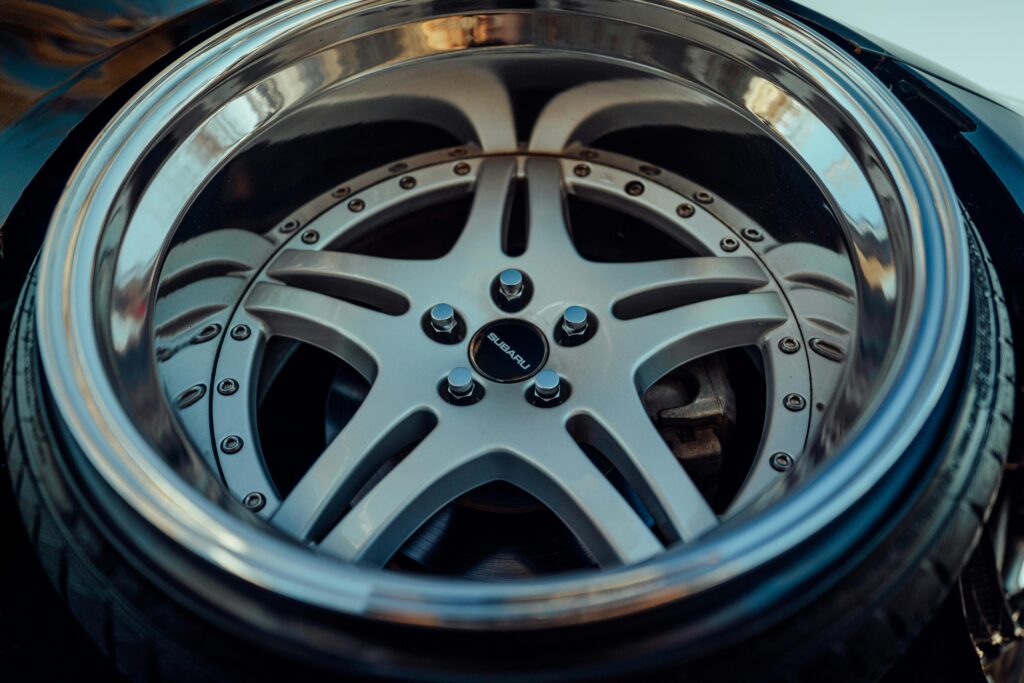
It goes without saying that alloy wheel upgrades are infinitely popular on the import scene. In fact, it’s not just in the hardcore modified car community where getting some shiny new alloys seems to be a must. Even in the mainstream, it has to be the number one tweak for any car.
When it comes to the grey imports we all know and love, you’ll find that aftermarket alloys are so popular in the US, Australia and Japan that plenty of imports land in the UK with them already fitted. An added bonus for many enthusiasts on our shores, right?
But what if you’re in the market to upgrade your alloy wheels anyway? Well, aside from the construction and type of wheel you choose, it makes sense to make sure that they fit your car in the first place.
So, with that in mind, here’s everything you need to know in our special guide to alloy wheel fitment and how you can upgrade yours.
Bolt pattern – PCD
Bolt pattern is perhaps the number one concern when looking for new alloys because it’s the first hurdle in knowing if a certain wheel will fit your specific car.
Alloy wheel bolt pattern – otherwise known as the pitch circle diameter (PCD) – is the measurement of the spacing of the mounting holes in your alloy wheels, which directly corresponds to the studs or bolt holes on the hubs of your car. Unfortunately, it’s not quite as simple as any four or five-stud wheel fitting any four or five-stud car. For a wheel to fit properly onto any hub, the PCDs need to match precisely.
PCDs are expressed by showing first the number of studs/bolt holes and secondly the distance in millimetres (sometimes inches in the US) that they are spaced around an imaginary circle. Cars and trucks can have anything from three to ten bolts per wheel depending on their size. But, when it comes to passenger cars, by far the most common are four and five-stud wheels.
Four-stud hubs
The PCD measurement on a four-stud hub is a straight line from the centre of one stud through the centre of the hub and onto the centre of the opposite stud.
In other words, a 4x100PCD would be four bolt holes/studs evenly spaced around an imaginary 100mm diameter circle.
Five-stud hubs
A 5x100PCD is the same principle; five evenly spaced studs/holes around a 100mm circle. It’s a little trickier to measure because there’s no stud or hole directly opposite the stud you’re measuring from. Instead, it’s a straight line from the centre of the first stud through the centre of the hub and on to the edge of the imaginary circle between the near-opposite two studs.
Common import PCDs
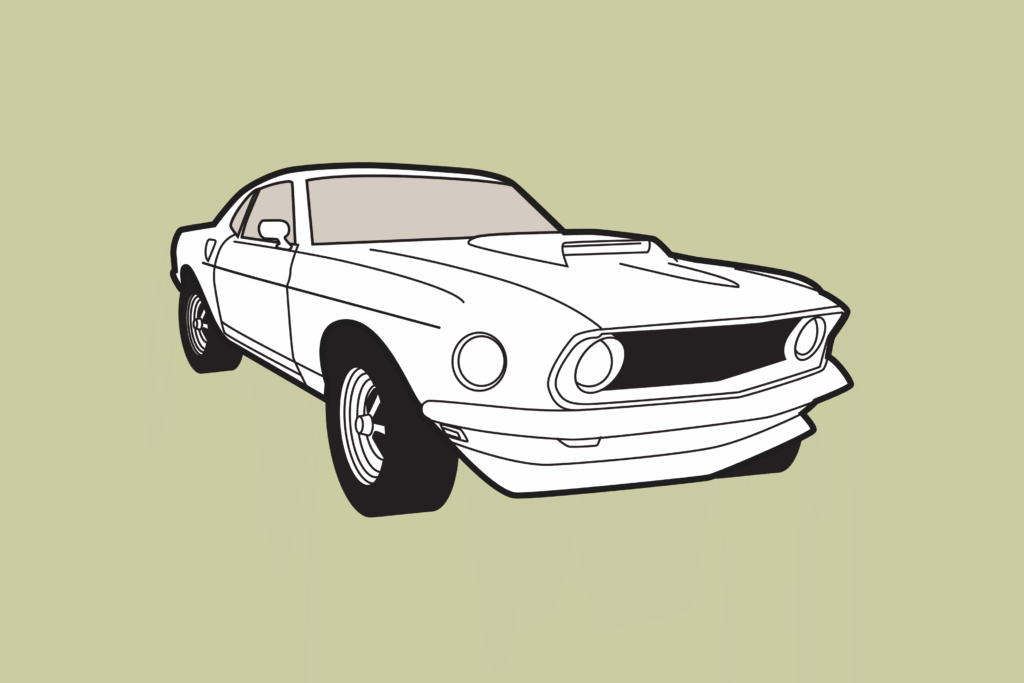
In the world of imports, there are many common PCDs, and not just the almighty 5×114.3PCD – usually referred to as ‘Jap fitment’ – found on a multitude of cars like the Nissan Skyline, Mazda RX-7 and Mitsubishi Evo (IV-X). It’s not just one for the Japanese cars, either. It’s also one of the most common found on American cars. Early Dodge Chargers use 5×114.3 (5×4.50-inch) wheels, along with many Chevy Camaros and Ford Mustangs.
Many popular grey imports also have PCDs that range from the 4x100PCD wheels you may find on the Toyota Starlet, Suzuki Wagon R, Ford Pinto and early Honda Civics, to the 4×114.3PCD wheels used on the early Nissan Silvia, the Dodge Daytona, Mercury Capri and early Mitsubishi Evos (I-III). Doing your research can pay dividends here, especially when it comes to cost-effective OEM upgrades and the second-hand wheel market.
Multi-fitment wheels
Many aftermarket wheel manufacturers produce multi-fitment alloys by utilising multiple bolt patterns that fit a number of different hubs. You’ll find that some alloys will have two sets of mounting holes – for example 5×100 and 4×114.3 – on the same wheel.
Nowadays, many of the larger wheel companies have the facility to offer the option of ‘blanks’, which are essentially finished wheels that haven’t had any PCD holes drilled. Machining is carried out to order, giving even more fitment potential over a number of different vehicles.
Not all wheel suppliers will do this, mainly because the drilling machines are seriously expensive, but it is an option that’s out there if you’re looking for off-the-shelf wheels for obscure fitments… or obscure wheels for common fitments.
Centre-lock wheels
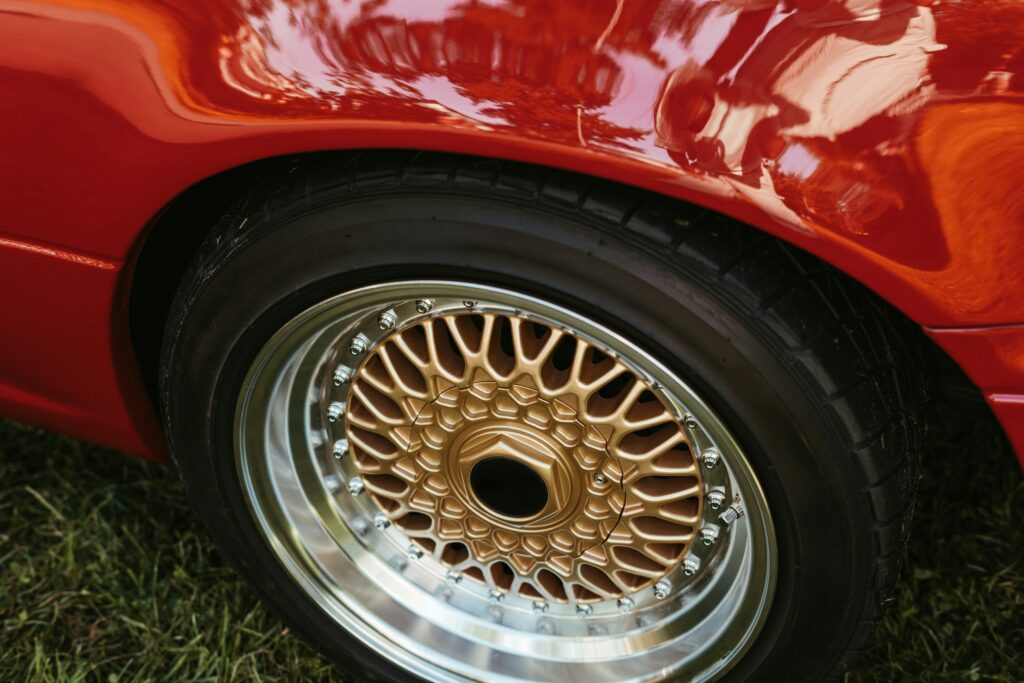
Many vintage, motorsport and even some road applications use wheels that don’t have a bolt pattern at all. These are known as ‘centre-lock’ rims. To get them on the car, these either use a huge high-torque nut or a ‘knock off’ which needs to be hammered on with a mallet or screwed on with a special tool.
They’re not that common, of course, but they’re well worth a mention when it comes to the most retro imports from Japan, Australia and the USA.
Centre bore
And it’s not just about bolt pattern; the centre bore of the alloy wheels you choose is also crucial. The centre bore is the diameter of the hole in the back of the wheel that fits directly onto the hub. Once again, it needs to match the wheel and hub exactly.
Modern wheels are hub-centric, which means the centre bore will fit tightly onto the vehicle hub, transferring the load directly to that key component. In other words, the bolts/studs don’t take the full weight of the vehicle. With a hub-centric setup, vibration is reduced and the bolts and wheel nuts do nothing other than hold the wheels on.
Lug-centric wheels are far less common but do still pop up on older American cars. This is where the bolts take the load of the vehicle because the centre bore of the wheel doesn’t fit snugly onto the hub. These aren’t ideal, even on modern roads, and require regular replacement of the studs or wheel bolts.
Some of the most common centre bores for the JDM import market include 64.1 for most Hondas, 60.1 from Lexus and Suzuki, 67.1 from Mazda and Mitsubishi, 56.1 from Subaru and 66.1 from Nissan. Just be aware that, while they tend to use these throughout their ranges, it’s not the same for all their cars. American cars tend to use a multitude of different centre bores, too.
Centre bore adaptors
In most cases, aftermarket wheel manufacturers hedge their bets by standardising the centre bore of their wheels with one that’s slightly larger than most of the desired fitments. 73.1mm is the most common, but this can range from around 72-75mm.
To make them hub-centric over a variety of different cars with different centrebores, aftermarket alloys are usually supplied with a fitting kit that includes plastic or metal centre bore adaptors.
These, commonly known as ‘spigot rings’, are specific to each car and essentially reduce the diameter of the centre bore by slotting into the back of the wheel and snugly over the hub. This gives a safe, cost-effective way of producing a wheel that will fit a whole host of vehicles.
Wheel offset
Offset is another parameter that’s important when looking for the desired fitment. Wheel offset is the distance (in millimetres) between the mounting face and the true centre line of the wheel. This measurement determines how much your wheels stick out in relation to the arches. It’s expressed as an ET number, which comes from the German word ‘Einpresstiefe’ or ‘insertion depth.’
A zero offset (ET0) means the mounting surface is exactly on the centre line of the wheel. A positive offset will have the mounting surface towards the front of the wheel, and negative offsets towards the rear. Generally speaking, the lower the offset, the more your wheels will poke out.
Getting the correct offset is important, not just for looks, but to stop the wheels or tyres fouling the inner arches or suspension components – an MOT failure here in the UK. For most aftermarket applications, finding the right offset for your car is a compromise between increased wheel width and the space available under the arches.
Wheel width and diameters

Alloy wheel diameters are still universally expressed in inches – a 17-inch wheel is 17 inches across, right? Well, yes and no. Wheel diameters are measured across the barrel, where the tyre seats. These are standardised to ensure the tyres fit tightly onto the wheels, and in most cases, a 17-inch wheel will be an inch or so bigger across the face.
It’s the same when it comes to wheel width; it’s measured inside from the bead seat on one side to the bead seat on the other. Width is never measured from furthest point to furthest point; if you measured a 7-inch wide wheel like this, it could be anything up to 8 inches wide.
Staggered wheels
The term ‘staggered’ usually refers to setups where the wheels on the front and rear axles are the same diameter but different widths – most commonly wider on the rear.
Car manufacturers typically fit wider rear wheels to rear-wheel drive cars to offer wider tyre options for better grip on the drive wheels. To some extent, this also promotes understeer, which is much easier for your average driver to control than oversteer.
It’s not always the case, of course; the Toyota GT86 (Toyota 86 in Japan and Scion FR-S in the USA) was specifically fitted with a ‘square’ setup (where both axles have the same width wheels) to help promote a little oversteer, making the car ‘more fun’. Aside from that, wider wheels on the rear are common on many standard Japanese imports. Cars like the Mazda RX-7, Nissan GT-R, Toyota MR2, Chevrolet Camaro, Mustang Boss, Dodge Challenger Hellcat and Holden Commodore SSV all came with staggered alloys from the factory.
The term ‘staggered’ can also refer to larger diameter wheels on one axle front-to-back – usually larger diameter wheels on the rear. Although this is much less common on Japanese imports and European cars, you’ll find this setup on many stock American imports such as the Chevrolet Corvette (C5-C8), Cadillac CTS-V and Dodge Viper, and on plenty of modified examples, too.
Plus sizing
By far the most common reason for changing alloys to fit a wheel with a larger diameter, this is called plus sizing. The benefits of choosing bigger wheels are more than purely cosmetic. The increased metal-to-rubber ratio promotes less flex, helping to improve handling and promote a more direct steering feel.
Wider wheels help with grip by putting more rubber on the road, and anything bigger always helps with clearance for future brake upgrades. That said, when you fit bigger wheels, the overall rolling radius of your new setup becomes crucial. The rolling radius of your wheel and tyre combination is the diameter of the wheel and tyre together. On most standard cars, this measurement is also used to calibrate the speedometer.
Deviating too far from the stock rolling radius can cause the speedo to read incorrectly and cause both handling and clearance problems. On the bright side, though, it’s unlikely you’ll be putting 22s on a Nissan Micra which came with 13s from the factory. The general rule of thumb is that an inch or two over standard shouldn’t cause any major problems.
Keeping the rolling radius as close as possible is relatively simple; just make sure that as the diameter of the wheel goes up, the tyre profile (height of the sidewall) goes down. There are many websites dedicated to which tyre is best for which size wheel (in which offset), on which car, so it’s never been easier to do your research.
Upgrading your import
OEM upgrades
Car manufacturers typically use the same PCDs with similar centre bores and offsets throughout their range. This makes upgrading to a higher spec set of OEM wheels relatively straightforward, even if they’re from a different make and model.
If we’re looking at imports specifically, how about the Nissan Fairlady? You could fit the stock wheels from the 370Z model to the 350Z model – they’re both 5×114.3 with a centrebore of 66.1mm. In this case, Nissan GT-R wheels or R32 Skyline wheels will also fit. With the correct centre bore adapter (to take it to 56.1), all these wheels should also fit the late model Subaru Impreza STI.
Sometimes it can be far from simple, though. Just be aware that not all wheels from one manufacturer will fit all the cars they’ve ever produced, sometimes not even the same model car. Take the Nissan 200SX, for example, traditionally one of the most popular grey imports here in the UK. Older versions like the S12 and S13 models have 4×114.3 wheels, while the S14 and S15 has 5×114.3 wheels. The key, of course, is to check before you buy.
Aftermarket wheels
Upgrading with aftermarket wheels is perhaps the easiest option – it certainly offers the most choice. Most wheel suppliers are experts in offering the correct fitment for your car; all you have to do is choose the design you’re after and pick a diameter and they’ll do the rest. They’ll even tell you what size tyres you need.
While brand-new aftermarket alloys are rarely cheap, it pays to look out for any cost-effective wheel and tyre packages. And, if you happen to drive a big, heavy American truck or SUV, don’t forget to check that both your wheels and tyres are weight loaded to make sure they’re up to the job.
Wheel adaptors
Wheel adaptors are useful for specialist applications where you may be looking to fit a certain set of wheels, but they’re not available in the correct PCD and centre bore. These are a bit like hub-centric wheel spacers, only they’re used to change the PCD of the wheel to fit your hub.
Wheel adaptors come in all sorts of PCDs. For example, you can convert the 114.3PCD 66.1CB hubs on your Nissan to accept 5x120PCD 72.6CB BMW wheels. That’s aftermarket or standard wheels, provided they’re the correct size.
The thing to look out for with any hub adaptors (or wheel spacers) is that they change the final offset of your wheels. They add millimetres to the back of the wheel, lowering the offset and making it sit further away from the hub. As a rule of thumb, the offset of the new wheel should be higher than standard to be able to accommodate the adaptor – if you fit an ET45 wheel with a 15mm adaptor, the new offset is ET30, using a 25mm adaptor, it’ll be ET15 and so on. Measure twice and buy once!
Custom conversions
With lower offset wheels, chiefly where adaptors won’t work, there’s also the option of welding and re-drilling. Some wheel centre bores can also be machined to make them larger if they’re too small for your hubs.
Alternatively, you could have the perfect wheel, but it’s not quite wide or tall enough. In that case, there are specialists who can cut out the centres and convert your wheels to three-piece items.
As you can imagine, all these are highly specialist processes and won’t be suitable for every wheel out there, but almost anything can be done… at a price.