When you think of the giants of the American auto industry, names like Ford, Cadillac, and Chevrolet are usually the first to come to mind. But there is one brand that actually predates them all and, quite literally, paved the way for the existence of General Motors.
Founded in 1899 by David Dunbar Buick, the Buick Motor Company wasn’t just a pioneer in internal combustion; it was the bedrock upon which the world’s largest automotive conglomerate was built. While many today associate Buick with understated luxury and refined cruisers, its history is a surprising mix of high-stakes racing, fighter-jet-inspired design, and even royal approval.
From the sinister, turbocharged “Darth Vader” cars of the 1980s to being the first brand to ever build a concept car, Buick’s legacy is as influential as it is long. Here are ten facts you may not know about the oldest carmaker in the United States.
1. Buick is the oldest US car brand
Buick was founded by David Dunbar Buick in 1899, making it the oldest American carmaker that’s still in operation and one of the world’s oldest automobile brands.
To put that into context, Buick was established three years before Cadillac, four years before Ford, and 12 years before Chevrolet. On a global scale, it was founded in the same year as Renault and Fiat, 10 years after Peugeot and just 12 years after Karl Benz invented the Motorwagen (motor car).
Even so, Buick isn’t the oldest American car brand that’s still well-known today. Studebaker was founded in 1852, Oldsmobile in 1897, and Packard in 1899. All of these brands, however, have been defunct for decades.
2. The first car company under the GM banner
In essence, Buick was the genesis of General Motors, the company that became the world’s biggest automotive conglomerate. In the early 1900s, the Buick Motor Company was struggling with poor sales and heavy debts before it was purchased in 1904 by American businessman William C. Durant.
Durant was the founder of the Durant-Dort Carriage Company, the largest manufacturer of horse-drawn vehicles in the US, and he saw the opportunity to improve the safety of these new, petrol-powered horseless carriages. Being something of a marketing genius, Durant made Buick the largest car manufacturer in the US and the first to produce over 1,000 cars annually – and all within a couple of years.
Durant formed General Motors as a holding company in 1908 and, using the success of Buick as its first subsidiary, purchased Oldsmobile (then the Olds Motor Works) the same year. In 1909, he also acquired Cadillac along with Pontiac (originally the Oakland Motor Car). Durant went on to co-found Chevrolet, and he ran General Motors well into the 1920s. Buick is still an important part of GM.
3. Buick was a turbocharging pioneer
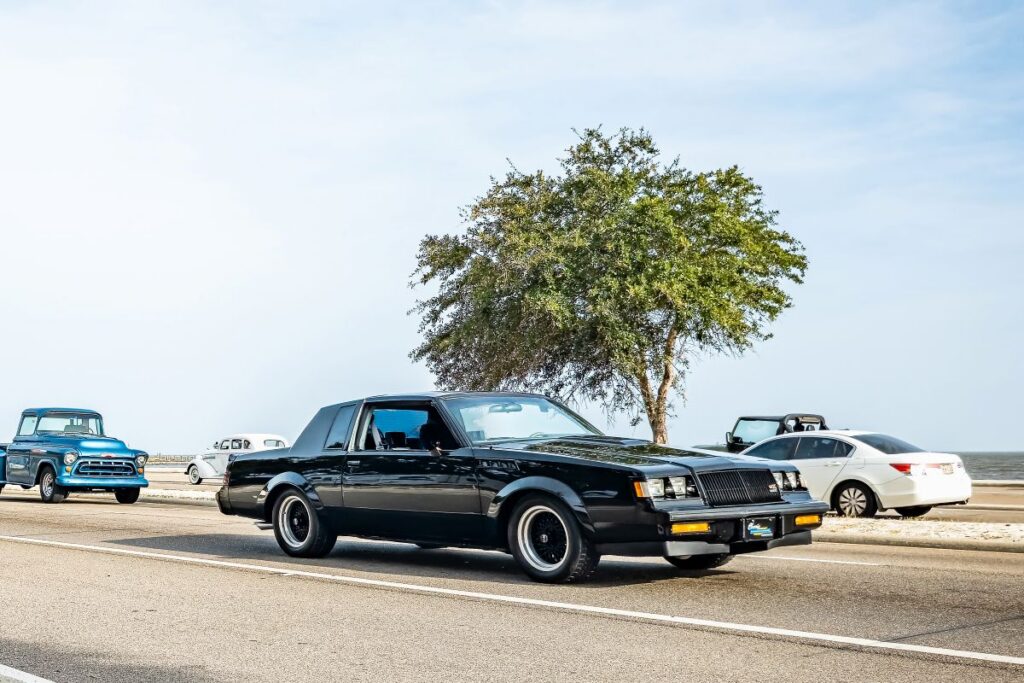
The Buick Grand National is a muscle car icon of the 1980s. It was not only one of the fastest of the day – and looked like one of the most sinister of the day with its black-out paint job (it was aptly nicknamed ‘Darth Vader’s car’) – but it’s one of the most important because, in an era of muscle cars having large displacement, naturally aspirated V8 engines, it used a 3.8-litre V6 with a turbocharger. In a way, the Grand National helped pave the way for modern muscle cars such as the modern Ford Mustang 2.3 and Cadillac ATS-V.
Essentially an uprated version of the highly popular Buick Regal, the Grand National was conceived in 1982 to celebrate Buick’s success in NASCAR Grand National racing. In just five years of production, nearly 30,000 were sold in the US alone.
The Grand National is also famous for being driven by Vin Diesel in the opening ‘tanker heist’ sequence in Fast And Furious (2009). Eight Grand Nationals were modified for the film, some being stunt cars with backwards-mounted bodies. Contrary to popular belief, these were not the rarer GNX versions.
4. The Buick GNX was the fastest on the block
The Buick GNX or ‘Grand National eXperimental’ was the ultimate edition of the Buick Grand National and the one that’s most sought-after by collectors. Hand built with help from McLaren in the UK, Buick commissioned only 547 GNX cars, each featuring a larger Garrett T3 turbo, a larger intercooler, and a reinforced drivetrain for 276hp and a 0-60 time of 4.6 seconds. These figures rivalled full-on supercar performance for the day, and even now it’s still pretty pokey! The GNX outpaced the contemporary Mustang, Camaro and even the Corvette, making it one of the ultimate ‘80s muscle cars… and all without the need for a V8.
5. Some Buicks were inspired by fighter jets
Post-war American car design has long been inspired by the aviation industry, not just with model names like the Mustang, Star Chief and Jetfire, but with unique styling cues such as hood ornaments, chrome trim and huge tailfins… just look at the biggest and most famous fins ever on the ’59 Cadillac Eldorado.
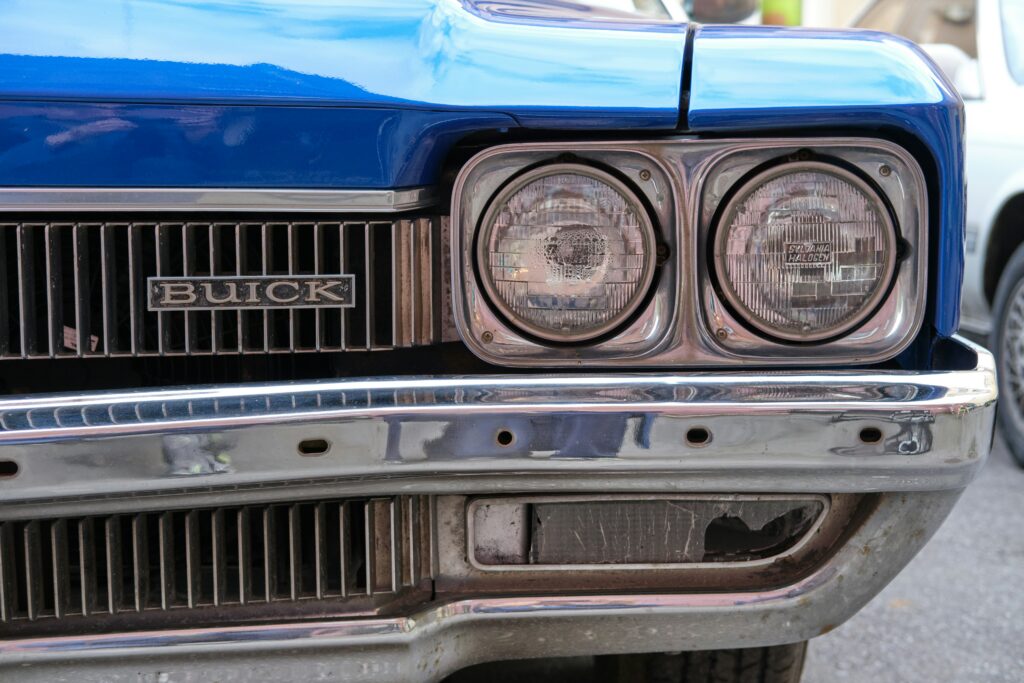
Many Buick models have followed this tradition, leading to one of the most famous design trademarks – Buick VentiPorts. These are the porthole vents found on the front wings of many Buicks between the 1940s and early 1980s, most famously on the Electra and Skylark.
Making the Buick range instantly recognisable, these first appeared as functional vents in the late 1940s on the Buick Roadmaster and Super and were inspired by the exhaust stacks on fighter planes. While they became purely aesthetic a year or so later, they continued to be an important part of the Buick brand identity for decades.
Traditionally, and with one or two notable exceptions, the VentiPorts also denoted engine size: V6 cars had three portholes, and the larger V8s had four.
6. Buicks have been imported for decades and driven by the upper classes
Buicks were some of the very first cars to be imported into the UK; they were even driven by royalty. Buick positioned itself as the luxury brand within GM. Through clever marketing, they emphasised advanced technology, craftsmanship and elegance, and offered cars that were comfortable, classy and refined.
Both King Edward VIII and King George VI used Buicks throughout the 1930s and right up to the 1950s, usually coach-built Buick Roadmasters. These were a symbol of prestige simply because they were such an uncommon sight in Europe, even for dignitaries.
Nearly always used for royal state visits in the US and, on occasion, here in the UK, they were said to be more spacious and comfortable than the usual British-built limousines from Rolls-Royce and Daimler. Buicks were sometimes presented as diplomatic gifts between the US and UK, too.
The export market is still key to Buick’s success. In the modern era, they’re even more popular in China than they are in the US, with sales in Asia making up over 80% of their revenue.
7. Long-running Buick models include The Sword
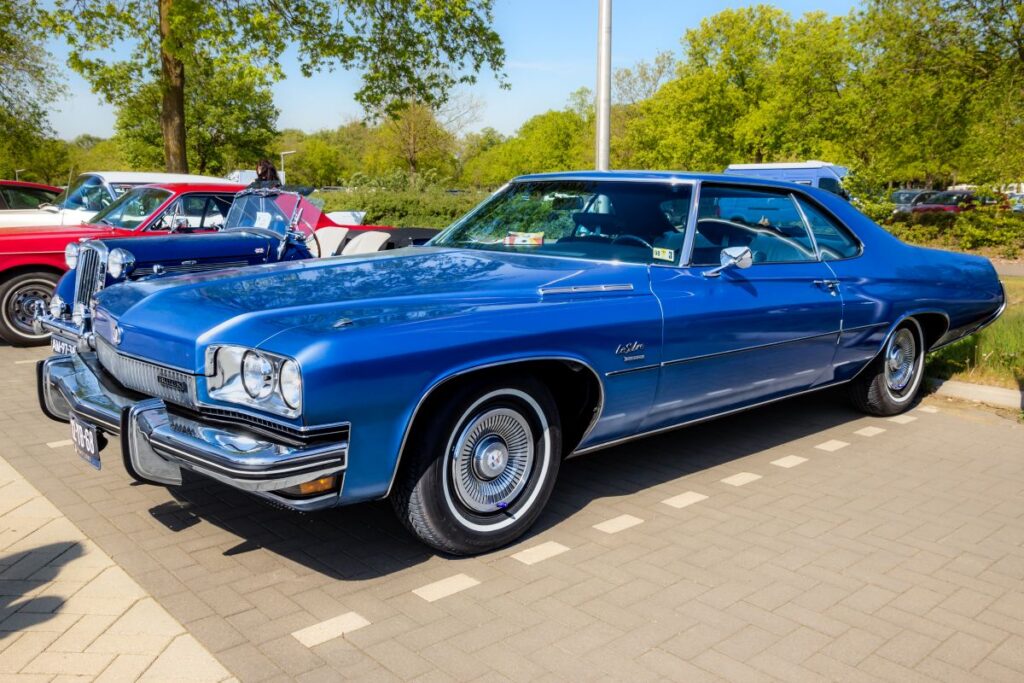
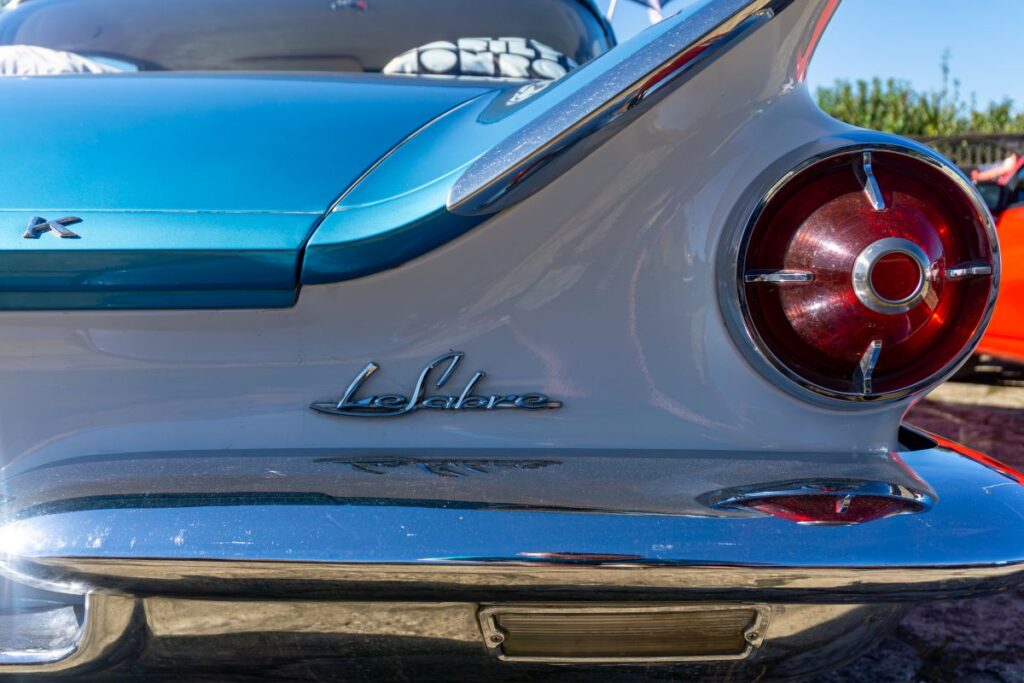
The longest-running Buick model was the LeSabre, which was launched in 1959 and produced for 46 years. This car is best known for spanning many distinct automotive eras and has since become an American middle-class icon.
The LeSabre started as a huge, chrome-clad American cruiser in the ‘50s and ‘60s, slightly downsized in the ‘70s and evolved into a V6 luxury saloon in the ’80s-’00s. It was also one of those cars that covered all the bases, being available as a two-door hardtop, convertible and saloon, along with a four-door saloon, hardtop and estate.
Buick LeSabres were (and still are) extremely popular and can be seen as background cars in many period TV shows and movies. The reason they rarely star in a ‘main car’ role is that, with around three million sold in the US alone, they’re seen as too normal. Instead, they’re often used to set the scene. In 2005, production of the Buick LeSabre ceased after eight generations, marking the end of the full-size American car era for Buick.
The longest-running model that’s still in production is the Buick Enclave Crossover SUV, which first hit the streets in 2007.
8. The Three Shield Logo has one for every car
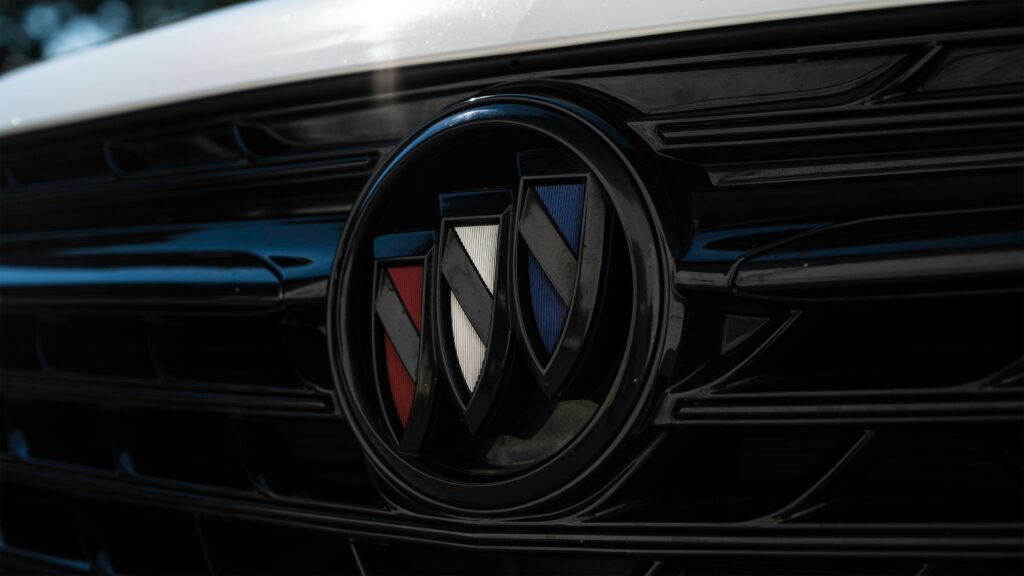
Although it has changed significantly over the years, the famous Buick Three Shields logo is based on the Buick family (David Dunbar Buick) coat of arms and has been used since 1959. The reason there are three shields in total (each originally depicting the coat of arms) is that they represent the three models in the Buick range in the late ‘50s – the Invicta, LeSabre, and Electra.
Although Buicks are seen as luxury (but pretty normal) cars in the US, the Buick logo is revered as a major status symbol all over Asia.
9. Buick made a host of innovations we take for granted
Innovation has always been key to Buick’s success; they achieved all kinds of automotive firsts, such as the first overhead valve (OHV) engine and the first use of mass-market turbocharging. They were the first to put a V6 in a passenger car (with the Skylark in 1961), and they were even the first to introduce indicators and wraparound windscreens. Most importantly, though, they also created the idea of the concept car.
The Buick Y-Job is credited as being the world’s first concept. Conceived in 1938 by GM’s legendary design chief, Harley J. Earl, this long, sleek roadster packed a 5.2-litre straight-eight engine and was a showcase for future innovations such as power windows and hidden headlights. The Y-Job was never intended to be put on sale, but that doesn’t mean that it wasn’t a fully working vehicle; it was driven by Earl himself as a personal car right up until the early 1950s.
A retro homage to the Y-Job was built by Buick in 2001. Named the Buick Blackhawk, it featured modern innovations – including a monster 7.5-litre V8 with 463hp – and can be seen driven by Will Smith in Bad Boys II (2003). The original Y-Job still resides in the GM Design Centre in Michigan.
10. ‘Race on Sunday, sell on Monday’ is a mantra
As with many manufacturers, entry into motorsport proved pivotal to Buick’s early success. Buicks have been used in grassroots racing since around 1904, and the company started building their own official race cars in 1908.
In 1909, Buick won the first 300-mile race at the Indianapolis Motor Speedway. This was the first major endurance event at the brand-new venue and would go on to become the legendary Indy 500 two years later.
In this era, racing was brutal, not to mention extremely dangerous. Just finishing an event was seen as a major achievement, and winning made brands legendary.
Drivers didn’t wear helmets or have seatbelts and roll cages, and cars were driven on a surface largely made of crushed stone mixed with tar. Due to flying debris, at least two drivers and two mechanics were killed at Indianapolis in 1909. And many spectators were killed or seriously injured. Its ‘death track’ reputation (and many lawsuits) led to the entire 2.5-mile oval being paved with bricks in 1910. This is where Indianapolis got its nickname of The Brickyard. To this day, you’ll see drivers ‘kissing the bricks’ (the three-foot strip of original bricks that remains on the finish line) after major wins.
In 1909, Buick’s lead racing driver (and winner of the inaugural 300-mile race) was Louis Chevrolet, who was instantly elevated to national star status. He used his fame to go on and create one of Buick’s main rivals when he founded Chevrolet in 1911.