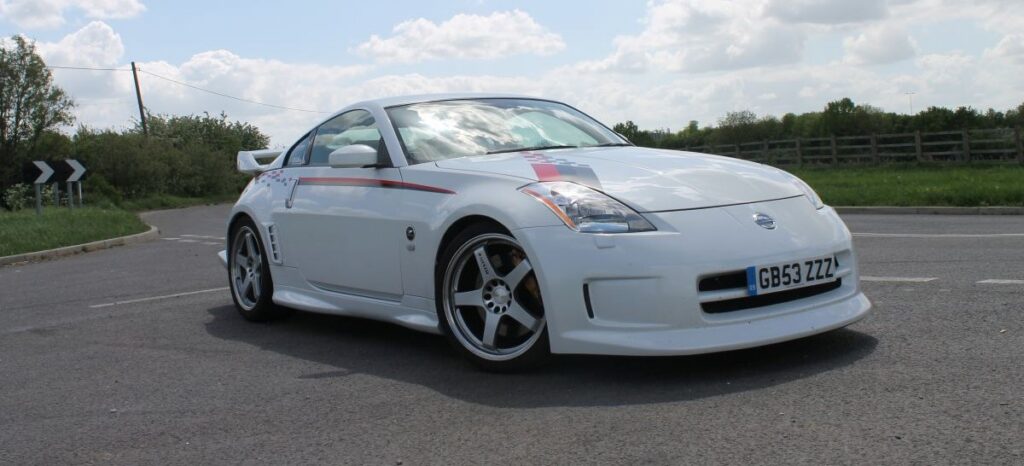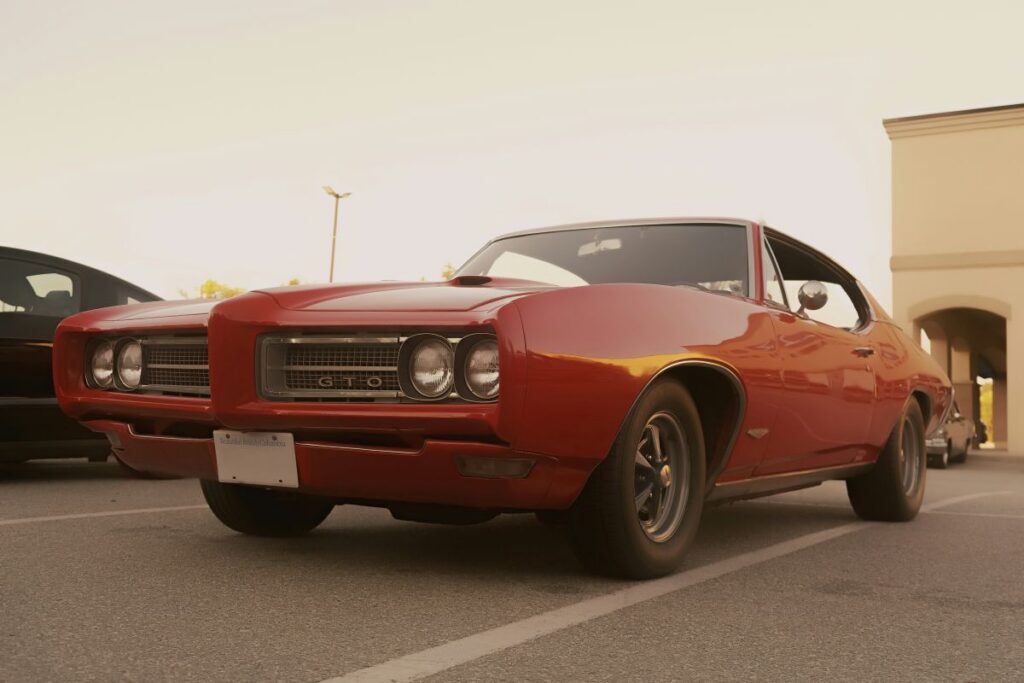
We all know that alloy wheels and the import market go hand in hand. Whether that’s standard wheels or those of the aftermarket variety, you’ll find that most cars on the road nowadays are fitted with a set of alloys. In fact, that goes for all cars, standard or otherwise… and both UK cars and grey imports.
With pressed steel wheels getting rarer and rarer, manufacturers have been fitting alloys as standard for decades now – you’ll certainly be hard pressed to find any modern car using old-skool steel rims. But it’s never been because alloys are cheaper, chiefly because they’re not. Car manufacturers choose alloy wheels for several reasons, including safety, performance, fuel economy and the all-important looks.
In the case of Japanese and American imports, especially the more retro and high-performance examples, it’s also highly likely that these will have been fitted with aftermarket alloys at some point during their lifetime. Modifying and racing culture is big business in the US and Japan, so many have been imported over the years sporting some of the best aftermarket upgrades. And then, of course, it’s not unusual for enthusiasts to fit them here in the UK, too. Just as soon as the cars land on our shores.
It’s not just modified car aficionados that tend to upgrade their wheels, though. It’s a universal truth in the car world that bigger alloys make your car look amazing and can even help it perform better. The point is that most cars will already have alloys, whether that’s for racing, for the road, or somewhere in between. So, with that in mind, let’s take a look at everything you need to know about alloy wheel types and what they’re made of.
Why do manufacturers use alloy wheels as standard?
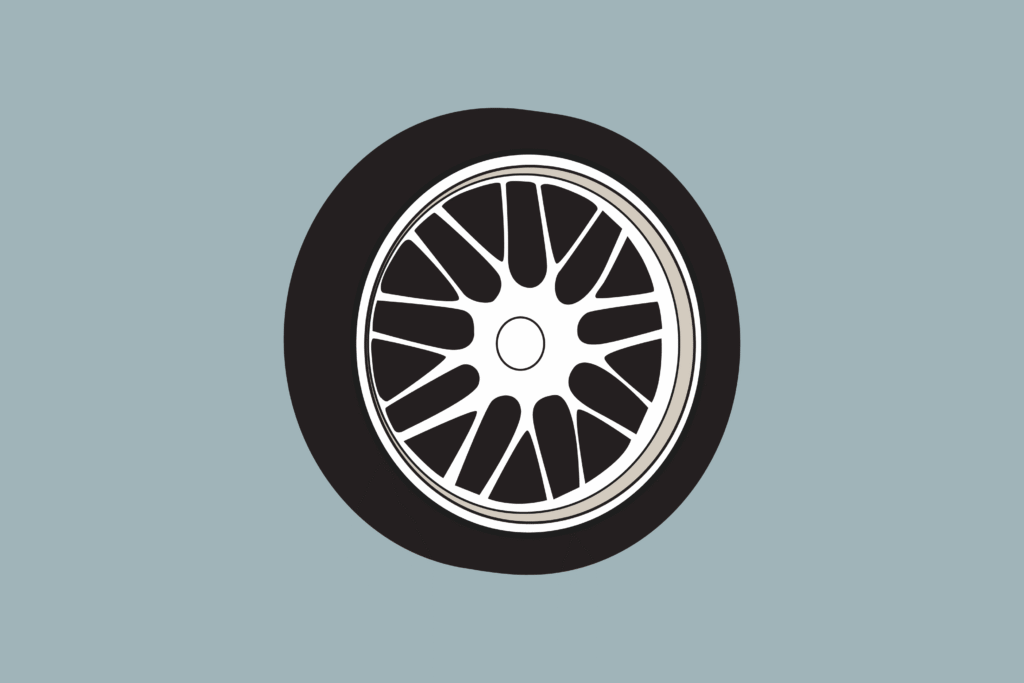
Aside from the obvious – being able to create designs that make their cars more desirable to potential buyers – utilising alloy wheels is all about chassis performance.
Alloy wheels have their roots in the racing world and were initially developed with a couple of key performance benefits in mind. As production costs have become more within the realms of manufacturing budgets over the years, it’s become something of a no brainer to fit alloys to all the new cars coming off production lines around the world. This started with the high-performance models in the 1960s and 1970s, but has eventually filtered down to become the norm on all the others.
What’s important is that car manufacturers can match the strength of steel wheels but with much lower overall weight. This reduction in rotating mass is not only ideal for performance, fuel economy and handling, but also helps with the longevity of all the other chassis components. An ideal way of increasing reliability.
More efficient heat removal is the other key asset. The alloy material will dissipate heat more effectively during braking, and most designs will physically aid cooling to improve stopping power and reduce brake fade. In this way, manufacturers can not only boast about performance, fuel efficiency and reliability, but safety, too.
What are alloy wheels made of?
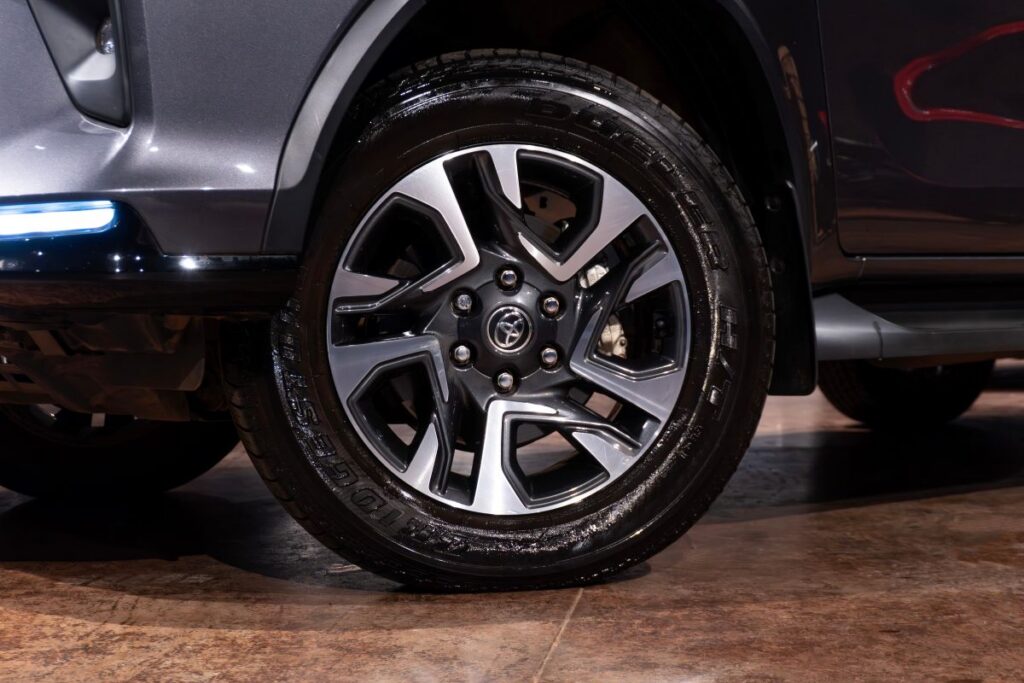
The exact composition of almost all alloy wheels is a trade secret, but the most common is a derivative of an aluminium alloy called LM9. This metal alloy includes a mix of magnesium, copper, silicon and titanium, amongst quite a few other elements.
LM9 is a strong yet light alloy, which makes it perfect for standard cars, high-performance models, and even motorsport use. Manufacturers use LM9 – often as part of their own ‘secret recipe’ – to build wheels for specific applications such as high-performance cars, big, heavy SUVs and even race cars.
Mag wheels
You may hear people referring to alloys as ‘mag’ wheels, and it’s because the very first were die-cast from magnesium. This is particularly relevant to the American import scene because it has become an old-school term (derived from the more classic US imports) used to refer to all types of alloys. The truth is that nowadays mag wheels aren’t necessarily made from magnesium, and not just because it’s seriously expensive.
Initially conceived for racing, lightweight magnesium wheels became popular on road cars in the 1960s. However, the material itself comes with a few problems. Magnesium rapidly breaks down when exposed to moisture and is susceptible to pitting, cracking, and corrosion. For this reason, they require regular maintenance – along with plenty of added protection – to keep them in the best (and safest) condition.
There’s also the fact that if magnesium wheels are accidentally ignited – say, through a burning tyre or friction from scraping on the road – it’s extremely hard to put them out. Magnesium will even burn under water and CO2. This is why traditional magnesium wheels are rare, and most alloy wheels are now die-cast from aluminium alloy.
Cast wheels
Most alloy wheels, standard or otherwise, are cast wheels.
The advantage of casting is that it’s relatively cheap because the whole wheel is created in a single process; all that’s left to do is a little machining to get the desired fitment. There are two main casting methods used in alloy wheel production: gravity casting and negative pressure casting.
Gravity casting is the simplest and most common. The process involves pouring the molten alloy into a mould and allowing it to cool.
Negative pressure casting works in a similar way, but, rather than pouring the molten alloy into the mould, it’s drawn up using a high-pressure vacuum. This helps eliminate any trapped gases and produces a stronger structure, and hence a stronger wheel.
Flow-formed wheels
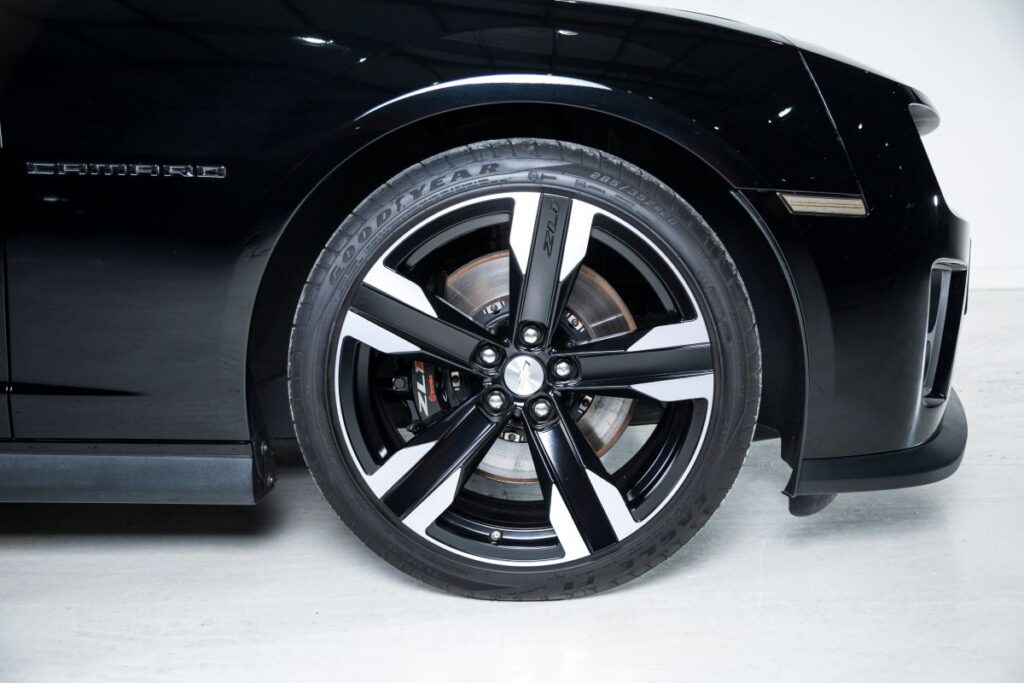
Because the production process is far more expensive, flow-formed wheels are most commonly aftermarket items. That’s not to say you’ll never see them on production cars, though. They can be found fitted from the factory on all sorts of high-performance models such as the Camaro ZL1, Toyota GR Supra, Mustang Mach 1 and Lexus RC F.
Each wheel manufacturer has its own name for this process, and, of course, they’re marketed in different ways by the car manufacturers themselves, but the way they’re made always follows the same process.
Flow-formed wheels are produced by taking a short-cast blank and using a special machine to draw out the barrel to the desired width under immense heat and pressure. It’s a bit like clay being drawn up on a potter’s wheel.
The heat and pressure not only give the wheel its final width but also change the grain structure of the alloy to make it much stronger and lighter. Aftermarket flow-formed wheels are infinitely popular when it comes to fast road and track day applications.
Forged wheels
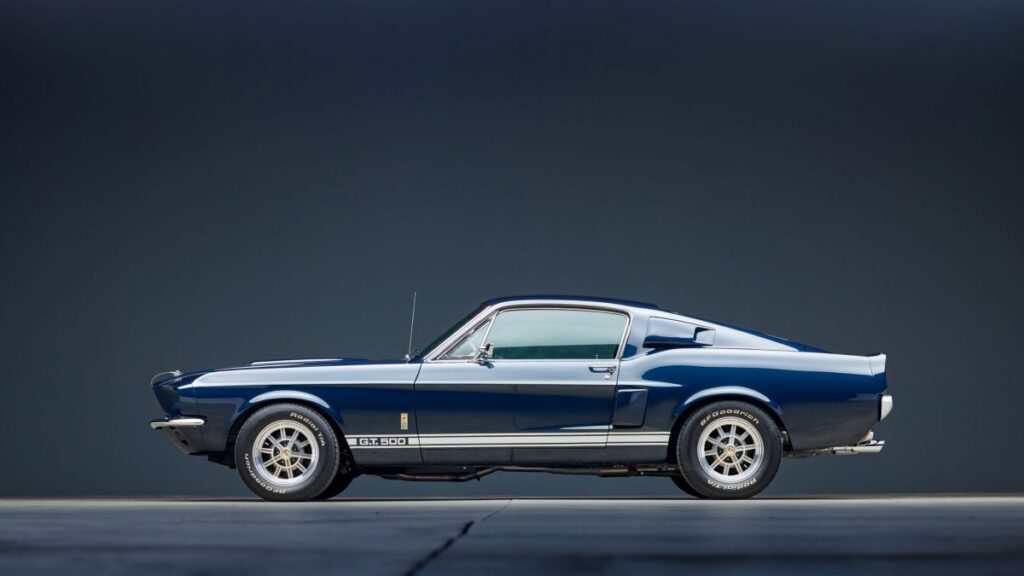
True forged wheels are rarer and are usually associated with the most expensive aftermarket alloys. Some high-end production cars, like the GT-R Nismo, Honda NSX, Corvette ZR1 and Mustang Shelby GT500, come with forged wheels as standard (or as an option). But, due to their huge expense, you’ll only see them on halo models and race cars.
In most cases (and along with flow-formed wheels), the wheels on all these performance models are not produced by the car manufacturers themselves, but by specialist aftermarket wheelhouses such as BBS, Work and RAYs Engineering. These wheel manufacturers will often make cast wheels for special edition OEM models, too.
A forged wheel will start off as a solid block of cast metal called a billet. This will undergo extensive heat and pressure treatment, making the metal less porous and improving its strength, durability and resistance to corrosion.
The original cast billet will have a non-directional grain structure created during the initial casting. The huge pressures of the forging process are used to push the material in the desired direction and line up the grain to increase strength. The grain structure is also forced to run from the centre of the wheel outwards, creating a wheel that can be as much as 300% stronger than a cast alloy. After this treatment, the billets are forged into different profiles before being milled on a computer-controlled CNC machine to create the final design.
Forged wheels are used for the highest performance applications because the process ensures that the same structural integrity of a cast wheel can be achieved using significantly less material. This means that a forged wheel may be expensive, but it can be up to 30% lighter than the cast equivalent.
Multi-piece wheels
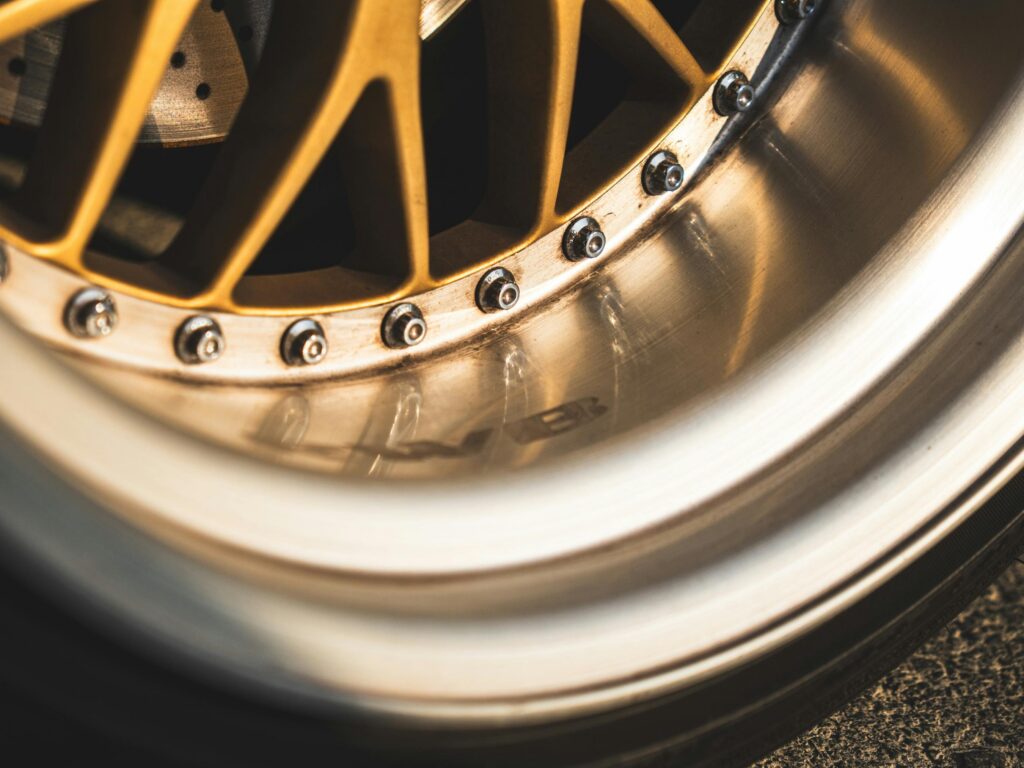
Forged wheels are strong and lightweight and are often produced in monoblock (i.e. one-piece) form for specific cars. But, to give manufacturers maximum flexibility for fitment over a number of vehicles, they can also be produced as multi-piece wheels, commonly known as split rims.
Three-piece wheels are made up of a barrel (inner), a centre, and an outer lip. These give the most flexibility for road and racing applications because they can be built up to just about any width and offset.
Two-piece wheels are similar, but the centre and barrel are forged and CNC-machined as a one-piece unit. The outer lip is the interchangeable part, allowing for the desired width and offset.
While these are extremely rare on standard cars – you’ll be looking at supercars and high-end exotica such as the McLaren Senna, Lexus LFA and Dodge Viper SRT – in the modified community, multi-piece wheels are seen as the ultimate aftermarket upgrade. This also means that many modified imports will already be sporting a set when they land. You could be lucky!
Wheel finishes
Most cast alloys are painted or powder-coated. This is because the alloy material itself needs protection from the elements (particularly moisture and road salt) to resist corrosion. These thick protective layers are vital for both safety and the longevity of your wheels because they help stop the metal structure from being degraded and eventually failing.
Even ‘polished’ wheels (or polished wheel lips) will usually have a few coats of lacquer to stop harmful elements from making contact with the bare metal surfaces.
Chrome and adonised wheels are usually produced in the same way – using a specialist paint rather than genuine chrome plating or adonising. You’ll find some genuine chrome wheels on older American imports, but they’re rare nowadays, simply because chrome plating is extremely expensive. These specialist processes are usually reserved for high-end forged wheels, which can often be ordered with just about any finish you can imagine.
The good news is that many modern aftermarket alloys already come in a variety of cool designs and finishes, so you’ll nearly always find something you love, something that suits, and something that improves your import. As for physically getting them to fit your car though, there’s a few other things you need to know. So, check out our top guide to alloy wheel fitment.