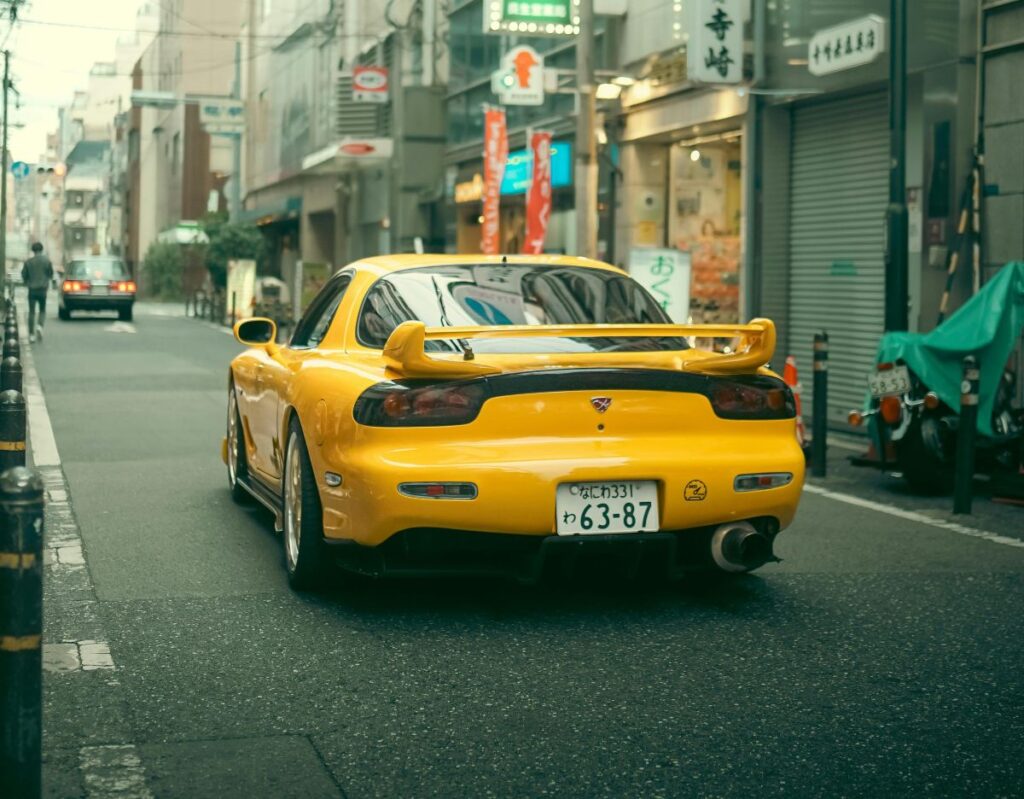
Traditionally, the Mazda RX-7 has proved to be one of the most popular Japanese imports ever to grace the UK. And that goes for both the mainstream car enthusiast market (those in the know) and the hardcore modified car community. But the truth is that every generation of this JDM performance icon is getting rarer and rarer, not to mention more expensive, by the minute. And that’s if you can find one for sale here, or in Japan.
With its sleek modern lines and turbocharged 13B rotary engine, the legendary third-generation Mazda RX-7, the FD, has always been the most popular on our shores. Appearances in popular culture – such as Vin Diesel driving one in The Fast and The Furious – have only boosted its reputation over the years.
The little Japanese sportscar celebrates its 35th anniversary this year, putting it well into classic car territory… one of the definitive modern classics at the very least. But even though the RX-7 FD can’t be classed as a JDM car because it was available through Mazda dealers here in the UK – much like the Nissan 200SX S14 (Silvia) and 300ZX (Fairlady Z) – there are many more grey imports in the UK than official UK cars. Unlike the offerings from other manufacturers too, the RX-7 was also called the RX-7 in Japan, giving it a true global identity. That, and the use of rotary power, made it nothing short of a legend.
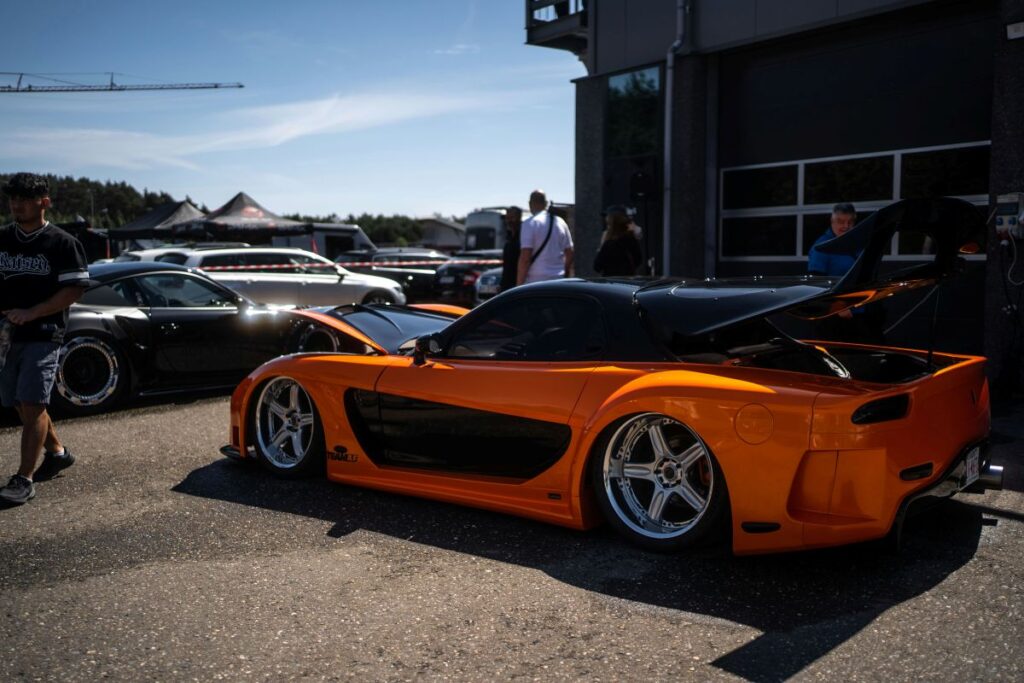
So, although they’re not exactly cheap to buy today, they’re probably likely to be a sight cheaper than they will be tomorrow. If you’re in the market, now could very much be the time to make the investment.
What is the RX-7 FD lineage?
The original Mazda RX-7 FB replaced the rotary-powered RX-3 in 1978, and this was followed by the RX-7 FC seven years later. Both models went through a huge number of changes over the years, so much so that the first RX-7 FDs (from 1991 to 1995) were classified as Series 6 cars. Series 7 – arguably the most popular variant over the years – came along in 1996, and the JDM-only Series 8 cars lasted all the way from 1999 to 2002.
The iconic 13B-REW twin-rotor engine is unique to Mazda and a descendant of scores of rotary lumps that had been fitted to cars and trucks – and the odd aircraft – since it launched the Mazda Cosmo in the early 1960s. Rotary engines are famous for being extremely small, lightweight and powerful, but at the expense of fuel efficiency. Ironically, they were used in Japan to get around strict taxes based on engine displacement. So, while officially the displacement of the sequentially twin-turbocharged engine in the RX-7 FD is only 1.3 litres, it puts out the same sort of power as a 2-2.5-litre piston engine. It certainly drinks like one, too.
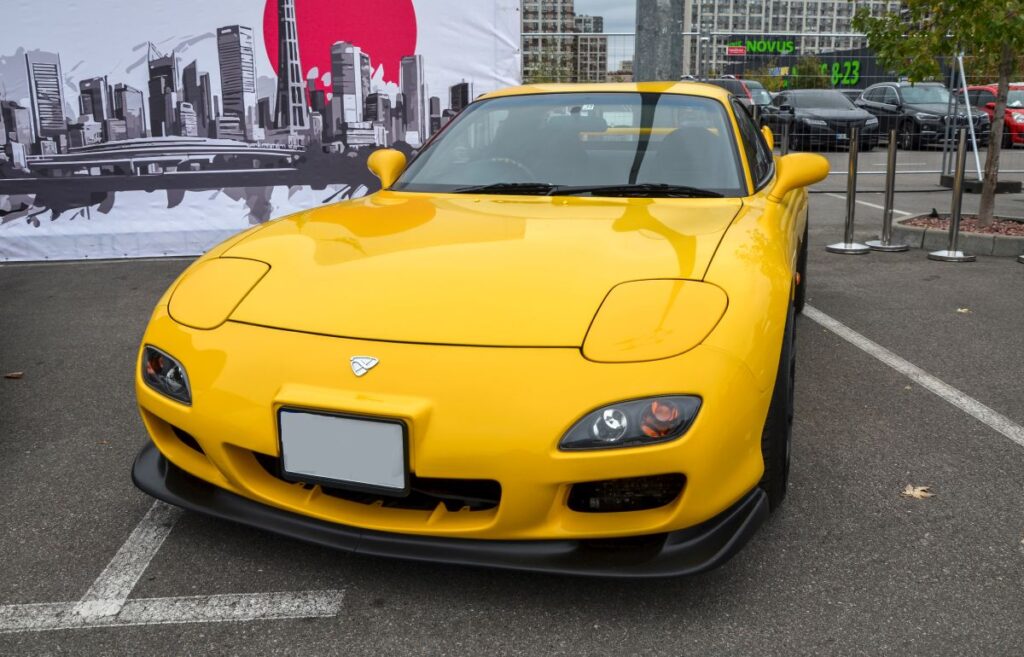
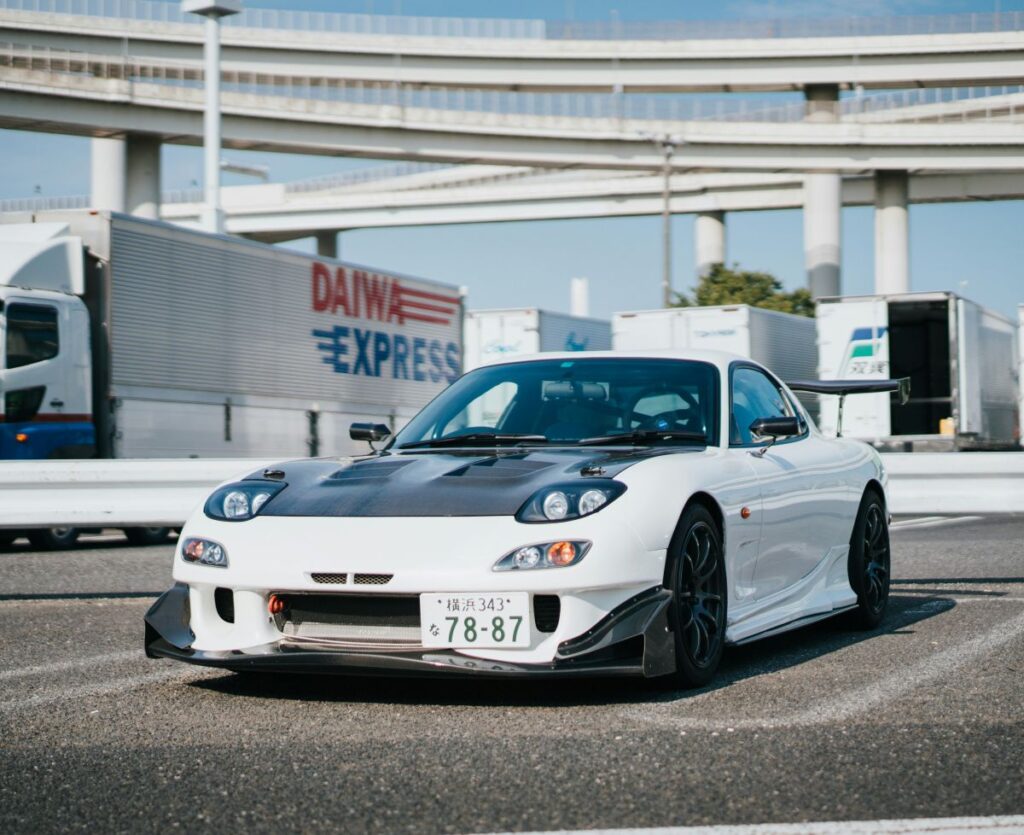
It’s true to say that the Mazda RX-7 isn’t cheap to run, but if you can get over the 15 or so mpg (25 is the official figure, but good luck with that!) you’ll see that the super smooth 13B rotary lump is a masterpiece of engineering. Especially when it comes to tuning potential. It’s also the main reason that the RX-7 FD has such supreme handling characteristics. This is said to be the main thing that gave the RX-7 the edge over many other sportscars of the day.
Because the 13B engine is so light and compact, it allowed engineers to mount it extremely low and far back in the engine bay. This gave the whole car a near 50/50 weight distribution. So, in a way, the engine isn’t just about the awesome power potential, it’s about how it engineered the rest of the car – the whole package.
In the modifying world, many RX-7 FDs have been fitted with big-power piston engines over the years – everything from the R33 Skyline’s RB25DET and RB26DETT and the SR20DET from the 200SX, to the LS V8 from the Chevrolet Corvette – but it could be argued that these are kind of missing the point of the RX-7. Not that we don’t love a meaty engine conversion, of course!
Speaking of tuning potential, of which the Wankel engine has plenty, the FD was the last rotary production car to be fitted with a turbocharger. The previous RX-7 (FC) had a single turbo and the FD had two for good measure: one turbo delivering power at low RPM and the second kicking in at higher RPM. However, its successor – the capable (but not quite as legendary) Mazda RX-8 – was fitted with a naturally aspirated 13B-MSP (Renesis) rotary engine. For many, then, the RX-7 FD marks the end of the turbo Mazda era, and it’s often cited as “the last of the great rotary-powered cars”.
What RX-7 FD models were produced?
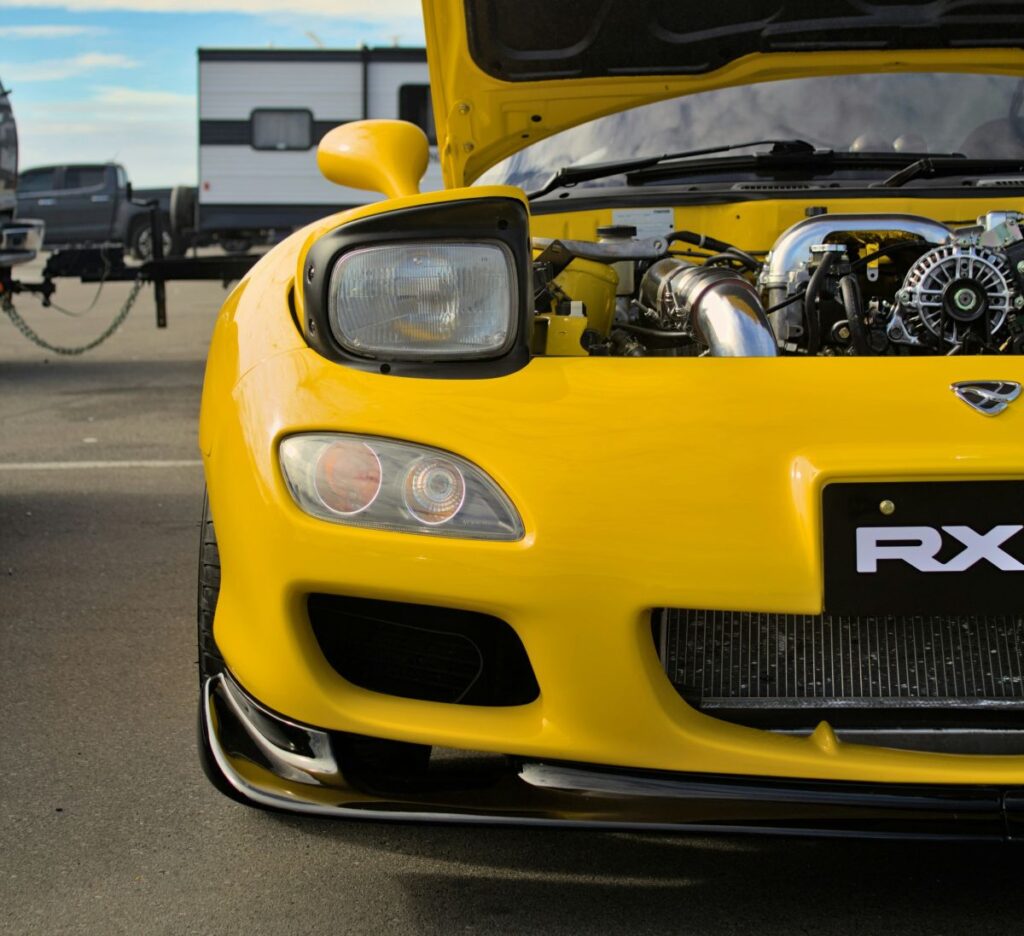
Over 20 different variants, including numerous limited editions and a couple of rare and sought-after JDM special editions – such as the Bathurst R and R Bathurst models – have been produced since 1991. This means that most of the examples you’ll find nowadays are slightly different with regard to spec. In fact, it’s almost impossible to list every single trim package and power tweak, especially when it comes to JDM cars, but the RX-7 FD can be broken down into three distinct generations: Series 6, 7, and 8.
Up to 1996, JDM RX-7 imports were also badged with Mazda’s Efini brand. This is because Mazda originally sold the RX-7 as the Efini RX-7 through their Efini dealer network, at the time their performance and luxury sub-brand. Efini can be seen as a bit like Toyota’s Lexus and Honda’s Acura brands, only Efini was launched to concentrate on the home market rather than exports. It was dissolved in 1996, so all RX-7s produced after were badged as Mazdas.
Only the Series 6 and early Series 7 cars were officially imported by Mazda, but there are far more grey imports here in the UK. Traditionally, UK cars were the most sought-after by car enthusiasts, despite being less powerful and less well-equipped. These tended to offer cheaper insurance, despite their elevated price. Of course, that’s not necessarily the case nowadays with specialist JDM import insurance brokers like Adrian Flux, and with JDM cars having the best specs, not to mention the rarity of UK cars (Mazda only sold around 210 official UK cars), all RX-7s are infinitely sought-after.
UK cars were imported until 1996 and came in one spec. These ‘2-seaters’ included luggage compartments instead of the ‘occasional’ rear seats, along with twin oil coolers, an electric sunroof, and an extra catalytic converter to comply with UK emissions regulations. The reason the FD wasn’t initially the biggest seller for Mazda was the price tag of around £34,000. This was competing directly with sports cars like the Porsche 964, which, arguably at least, had far more pedigree in the eyes of the car community. Even when Mazda significantly dropped the price to around £26,000, sales were slow.
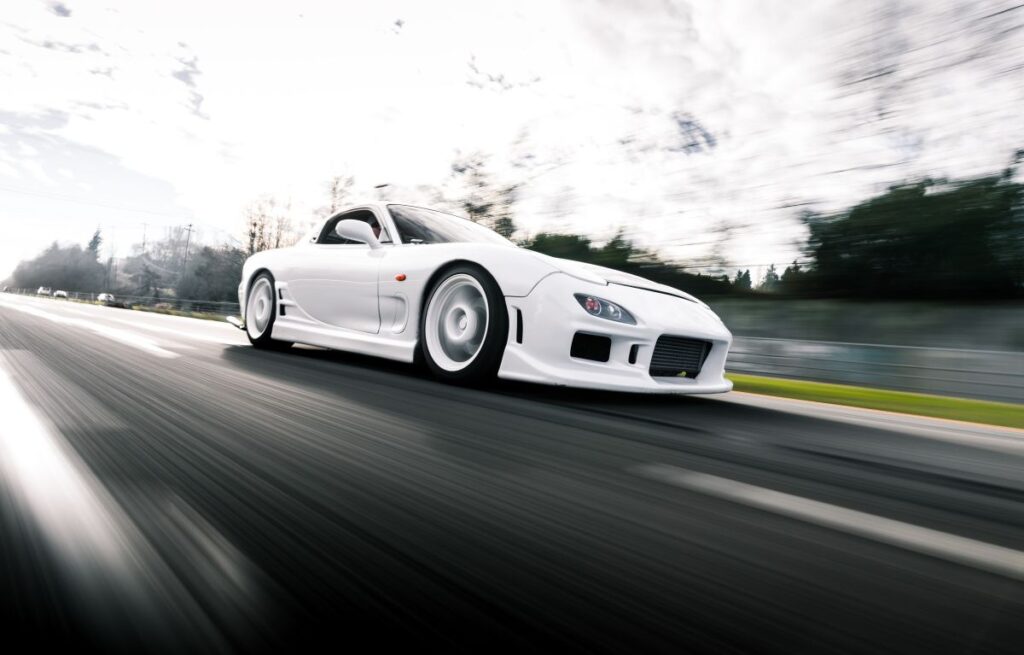
Series 7 cars were all right-hand drive and, even though many regard these as JDM models, a few were exported to the UK and many more were for sale in Australia and New Zealand. Again, UK cars are extremely rare, so you’ll nearly always be looking at a grey import. These Series 7 models came with a 10bhp power upgrade, but only for the models with a manual transmission.
Series 8 came with further upgrades but was only officially sold in Japan. These JDM cars also had a number of different specs, including a sought-after lightweight ‘Type RZ’ model.
All UK cars (and most imports) were equipped with a five-speed manual gearbox, although a few of the import models (including the Touring X, Type RB 4AT, and the limited-edition Spirit R Type C) come with a 4-speed automatic transmission. Unlike the manual cars, these have a reduced rpm range – they will rev to 7k rather than 8k.
Some of the most popular UK and grey imports:
| Model | Power | 0-60 | Top Speed |
|---|---|---|---|
| (1992-1995) Series 6 (UK) | 237PS | 5.1 seconds | 156mph |
| (1991-1995) Series 6 Import | 255PS | 5.0 seconds | 159mph |
| (1996-1999) Series 7 Import | 265PS | 4.9 seconds | 162mph |
| (1999-2002) Series 8 Type RS | 280PS | 4.7 seconds | 155mph (limited) |
What should I look out for when buying a used Mazda RX-7 FD?
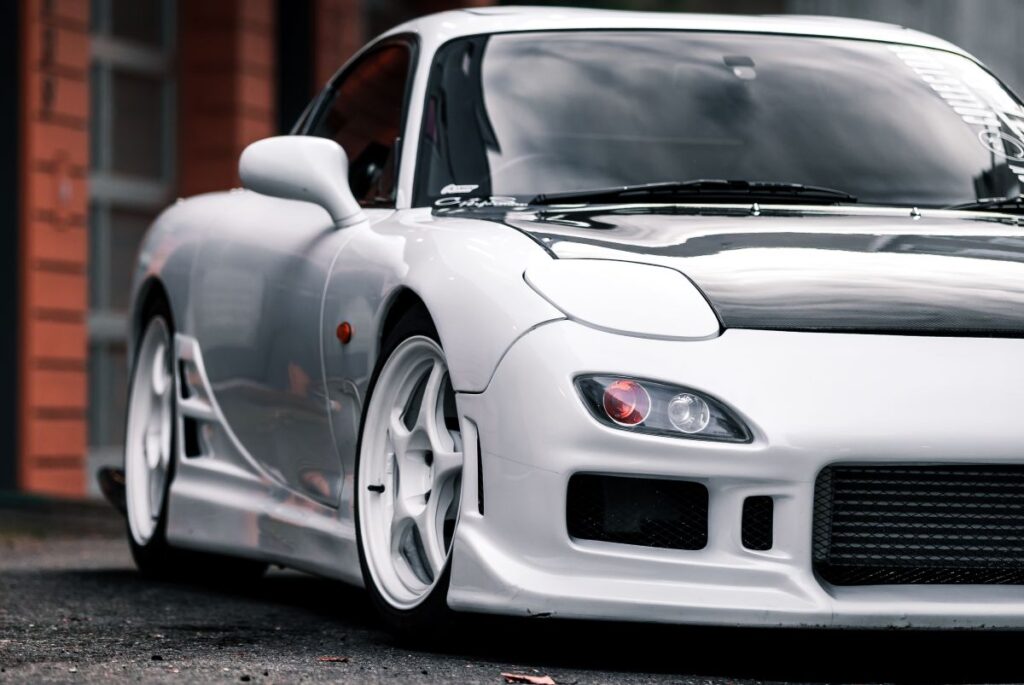
Service/Rebuild history
High-mileage engines aren’t a problem for the FD RX-7; there are many running perfectly well beyond the 200k mark. The key is maintenance, and plenty of it.
Rotary engines have a reputation for being unreliable, but that’s hardly fair – most failures are simply due to neglect or bad modifications.
Evidence of oil changes every 5-6,000 miles is a must, and the 13B will need a full rebuild every 60-70k. These essential rebuilds cost upwards of £3,000 at a specialist, so it’s imperative you check that it’s not only been done but completed by a reputable firm. Many FD RX-7s have had one or two rebuilds in their lifetime, and the more the better. If the car has been well maintained, there’s no reason why it shouldn’t be solid.
Hoses
The engine internals are simple – that’s one of the key selling points for the rotary. The same can’t be said for the outside of the engine; they are extremely complex, with around 60 vacuum hoses and all sorts of other parts dotted around the engine bay. Take your time checking for splits and any degraded hoses or other damaged parts; nowadays stock parts can be difficult (and expensive) to come by.
Gauges
The OEM temperature gauges have been known to fail and are often slightly over-weighted. This means that even when the engine is overheating, they climb only slightly over the normal mark. Any overheating is devastating for a rotary engine – even more so than a piston engine – so make sure the gauge is working and it reads correctly.
Smoking
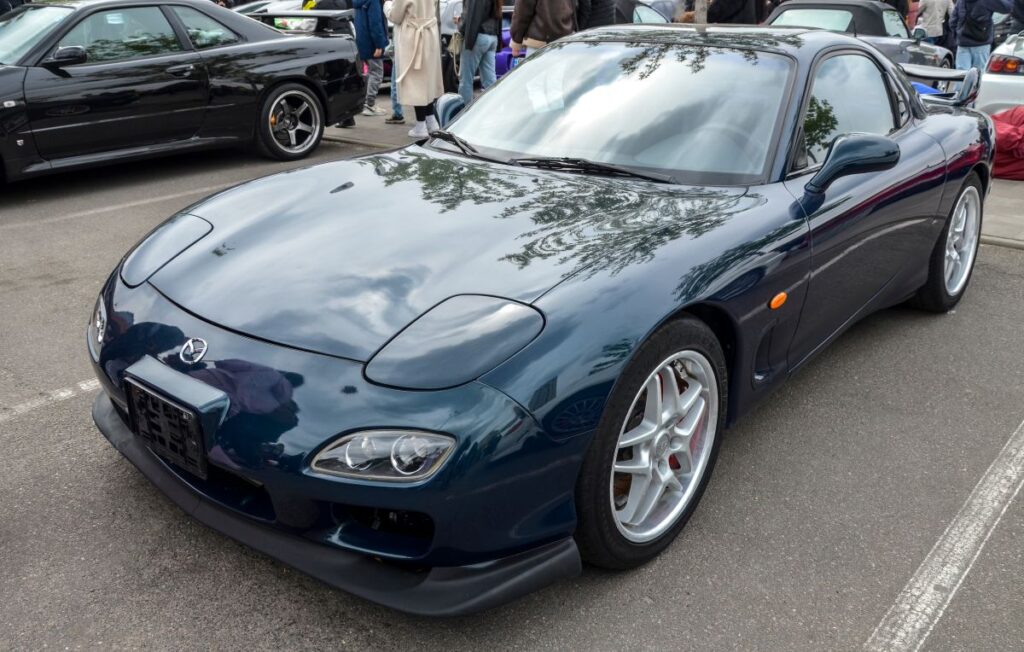
Any exhaust smoke should set alarm bells ringing. There will usually be a puff of condensation as the engine warms up; that’s completely normal. But if there’s any smoke after five minutes or so, walk away.
Rust
FD RX-7s tend to hold up better to rust than FB and FC models, chiefly because they used galvanised steel in key areas. However, grey imports don’t have much, if any, rustproofing from the factory, so checking if the car has been undersealed at some point is always a good idea. Common areas for rust include the sills, rocker panels, inner arches, rear quarters and – particularly on track cars – the suspension strut tops.
Modified FDs
Contrary to popular belief, you shouldn’t automatically be afraid of modified examples, which is handy because finding an RX-7 that hasn’t been modified in some way is difficult — you’ll certainly have trouble finding a standard one now. On the bright side, modified RX-7s are usually well looked after. In many cases, you’ll probably be looking to do a spot of modifying yourself anyway. Just choose your base car carefully and you won’t be disappointed.
Modifying your own FD RX-7
So, that’s our basic guide to the mighty Mazda RX-7 FD, including what to look out for when you buy. Perhaps most important, though, is what you can do to make your new purchase even better, and even more legendary. There’s no doubt that this iconic sportscar is ripe for a spot of tuning.
In fact, there’s plenty that can be done, so if you’d like to see where we’d start looking for the very best modifications, check out our quick guide on where to start modifying your Mazda RX-7.