There’s no doubt that the third-generation Mazda RX-7, the FD, is a tuning icon. It’s also one of the most popular – not to mention most revered – Japanese sportscar in the UK’s modifying community. With its near 50:50 weight distribution, twin turbochargers and sleek modern lines, this legendary coupe still brings a whole load to the table after 35 years… and not least that unique 13B-REW rotary engine.
Although originally this icon of the 1990s was officially offered for sale in Britain, its high price tag and lack of pedigree compared to European sportscars like the Porsche 911 meant that it wasn’t exactly a top seller.
In truth, official UK sales were something of a disaster for Mazda, with only around 200 being officially imported. But the car soon caught on and, on the second-hand grey import market, it became a legend among enthusiasts. And that was even before it went out of production.
Within a couple of years, they were shipped here in their thousands and a true Japanese performance icon was born. With that, and the fact that the JDM versions tended to have even better specs, it’s easy to see why there are far more grey imports on our shores than official UK cars.
What’s perhaps the best thing about Mazda’s most famous coupe, though, is its scope for modifying. So, if we had one ready to go, here’s our quick guide on the five areas we’d start updating.
1. Bolt-on engine tuning
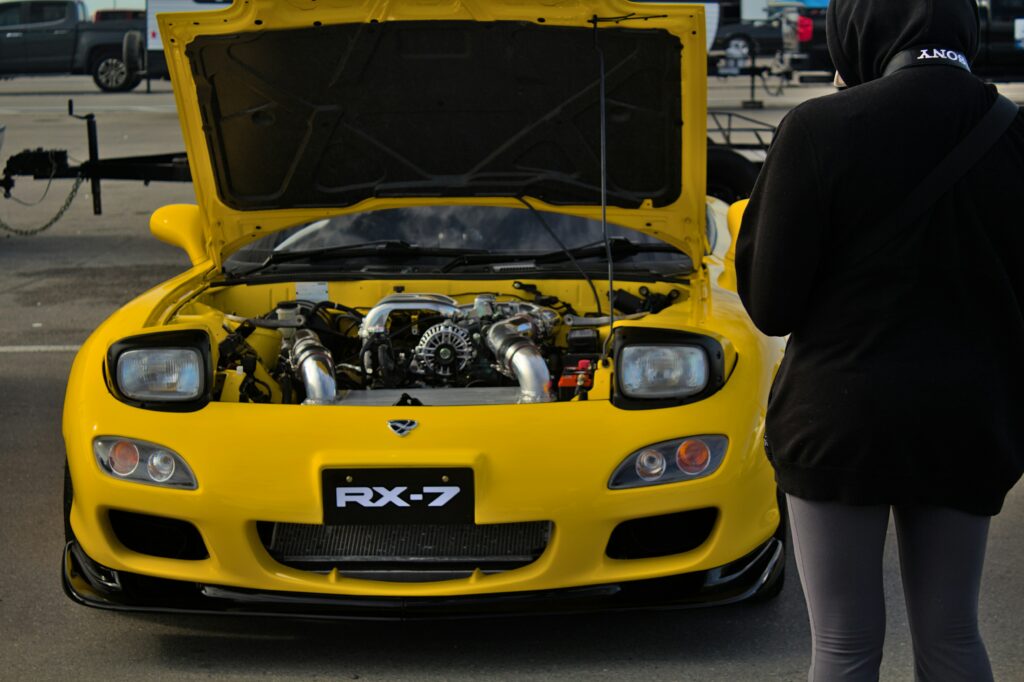
The first thing to do is change the oil and filters regardless of what the service history says. Maintenance is everything with the FD RX-7 and you’ll need to make sure it’s tip-top before you start any tuning. The engine is a masterpiece of engineering and highly tuneable, but be prepared for oil changes every 5-6,000 miles and a rebuild every 60k.
After the essential routine maintenance, most specialists recommend swapping all 60-odd vacuum pipes for good-quality aftermarket items. Just in case. The engine internals may be extremely simple, but on the outside, there’s a multitude of hoses that can crack and degrade over time. Fitting new hoses from specialists like Tegiwa simply gives you the best starting point for any future engine tweaks and ensures that you’re making the most of any tuning mods.
The key thing to remember is that fuelling upgrades are essential at every stage when upgrading any rotary engine. Simply fitting free-flowing filters or the like without adjusting the fuelling can be detrimental, so make sure the ECU software is upgraded to suit. There’s no doubt that a good engine mapping specialist will soon become your new best friend.
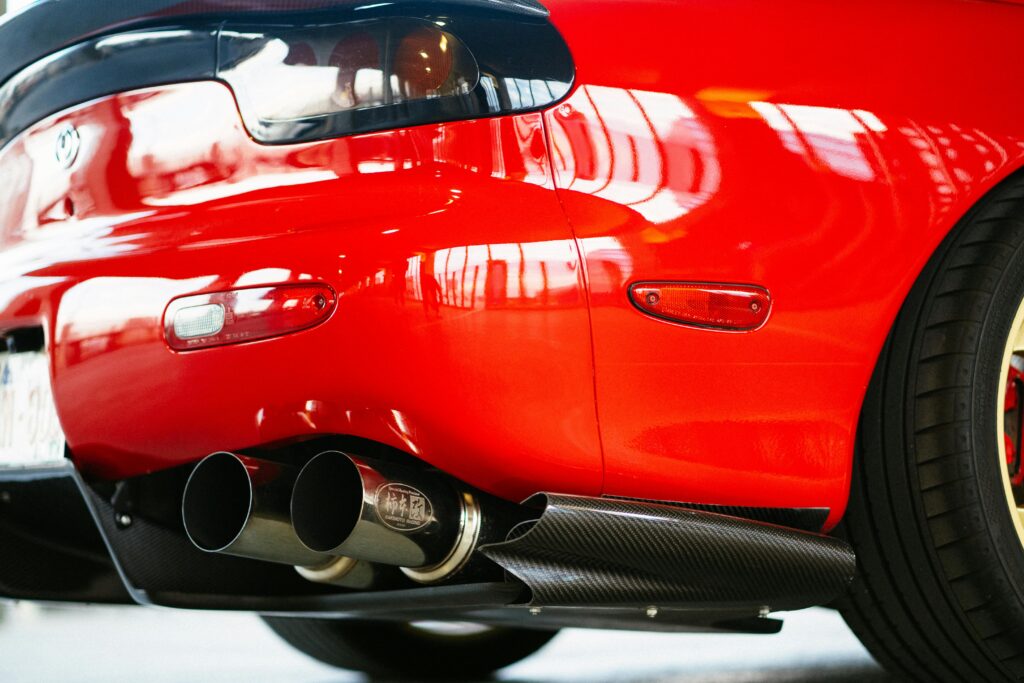
The best thing about the RX-7, though, is that simple bolt-on tuning upgrades, like a free-flowing exhaust with high-flow catalysts and filters, can yield impressive gains when matched with the right fuelling and an injector upgrade. Upwards of 350bhp is achievable with relatively easy – not to mention cost-effective – bolt-on upgrades.
On some early imports, you don’t have any cats at all; that’s always worth checking… and something of a bonus. And, at the top end of the market, you could look into swapping the sequential turbochargers for a single turbo conversion. This will nearly double the power potential.
We’d also look at fitting an uprated intercooler, simply because anything that combats heat on a rotary engine is never a bad idea.
2. Rotary engine porting
Rotary engines have no valves – the intake and exhaust timing is controlled by the shape and size of the ports. Porting a rotary is a little like porting the cylinder head on a piston engine and is designed to improve airflow in and out of the engine. In a rotary, however, it also has a similar effect on how long the ports are ‘open’ as fitting a performance camshaft on a conventional engine.
There are several common types of porting for rotary engines, all with different variations, but a street port is regarded as a mild upgrade designed for a usable (around 10%) power increase in road cars.
Bridge porting is the next step, a more extreme process designed for big-boost, high-power race tuning. With a bridge port, an additional intake port is added to increase duration. Low-end torque, smooth idling, fuel consumption and general drivability can often suffer, and that’s why most recommend bridge porting for race applications. Although many find their way onto the road.
There’s also peripheral porting, which is the rarest and most extreme type of porting and mostly for full-race engines. This is a lot more involved and comes with an even more serious trade-off between power and drivability. Yes, you’ll get huge horsepower, and the engine will rev to around 11,000 rpm, but it comes at the expense of low-end performance.
3. Chassis upgrades
Suspension upgrades, particularly fully adjustable coilovers and thicker anti-roll bars, are infinitely popular modifications on the FD and, with plenty on the market, can be cheaper than replacing the standard suspension parts.
Always opt for an established brand with a reputation for quality. The idea here is to enhance the handling, not to ruin it. Most owners agree that, although the standard double-wishbone setup is extremely impressive, it can do with a little stiffening to get the best out of the chassis, so a suspension and sway bar combo is a great place to start.
There are over 30 bushes that can be replaced with aftermarket polyurethane items to tighten up the handling. Standard bushes are known to wear and degrade over time, especially on hard-used road and track cars. Slack bushes allow the suspension parts to move away from optimum more than they should, having a detrimental effect on handling. Poly bushes eliminate flex and won’t degrade over time.
As for the brakes? Well, they’re very good for a ‘90s coupe, but that doesn’t mean they can’t be upgraded. There are a variety of uprated standard-size discs and pads on the market. And, if you’re looking for something a little larger for track work (or just to fill those huge wheels you’ve been looking at), big-brake kits with larger discs and multi-piston callipers could be the way forward.
4. Wheels
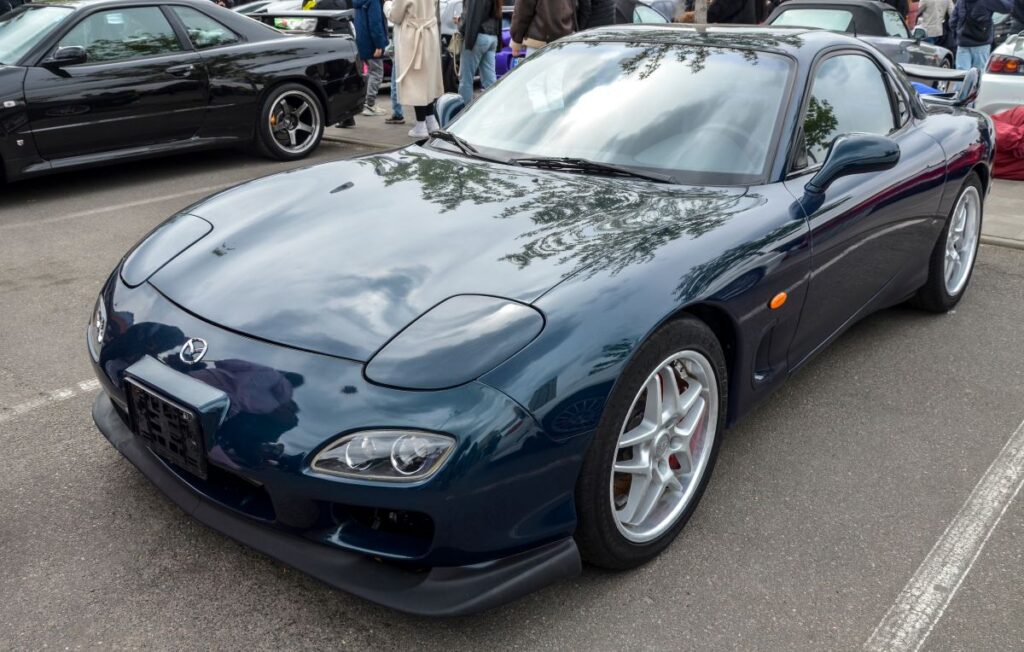
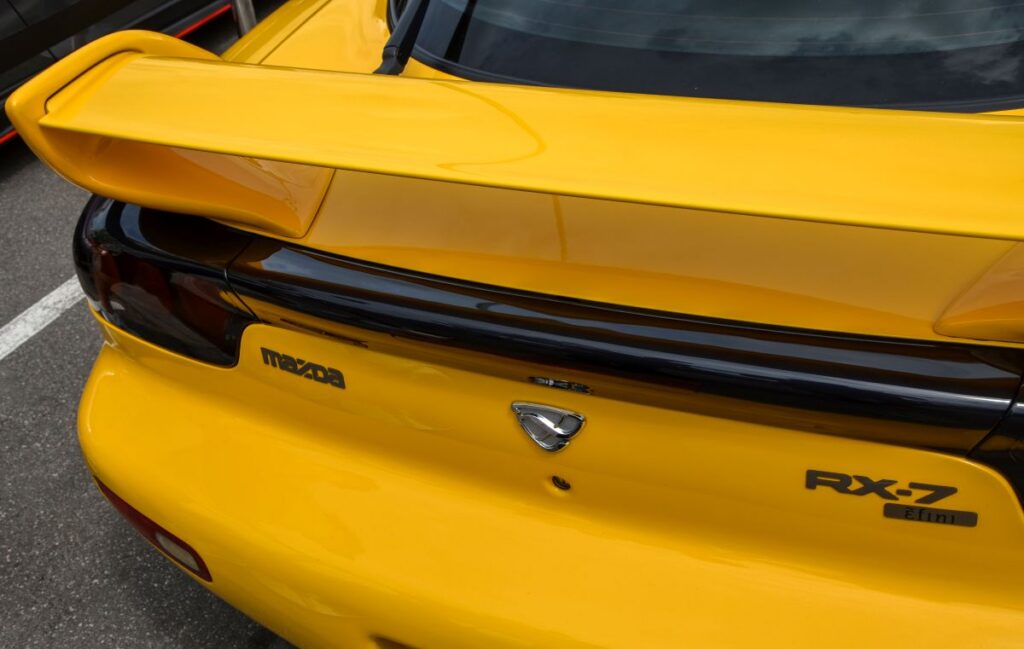
The factory bolt pattern for the FD RX-7 is 5×114.3, with a centre bore of 67.1 mm. Most FDs came with 7.5×17-inch wheels as standard, with 7×16-inch wheels on some early models… although an RX-7 on standard wheels is a rare sight nowadays. Surely there can’t be many left?
Aftermarket wheels are readily available for the RX-7, and wider or larger-diameter wheels are a common – perhaps the most common – upgrade. We’ve seen just about every configuration over the years, but many purists believe in keeping to 17 or 18-inch diameter rims to keep the Mazda’s almost mythical handling. With that in mind (and for more grip), we’d start looking at 8×17 ET38 for the front and 8.5–9×17 ET35–38 for the rear. If you’d like to go bigger, Vossen 8.5×18 ET38–45 and 9×18 ET35–38 offer a more aggressive look.
Design wise, just about every style is available. If it were up to us, and with more than a dab of motorsport influence, we’d be looking at lightweight, forged or flow-formed wheels like those from Rota. Maybe some of the all-time great classic JDM alloys from legends such as Rays Engineering or Work, available through specialist distributors like Coordsport or Part Box. It is a rather special car after all, we think it deserves some special wheels.
5. Exterior
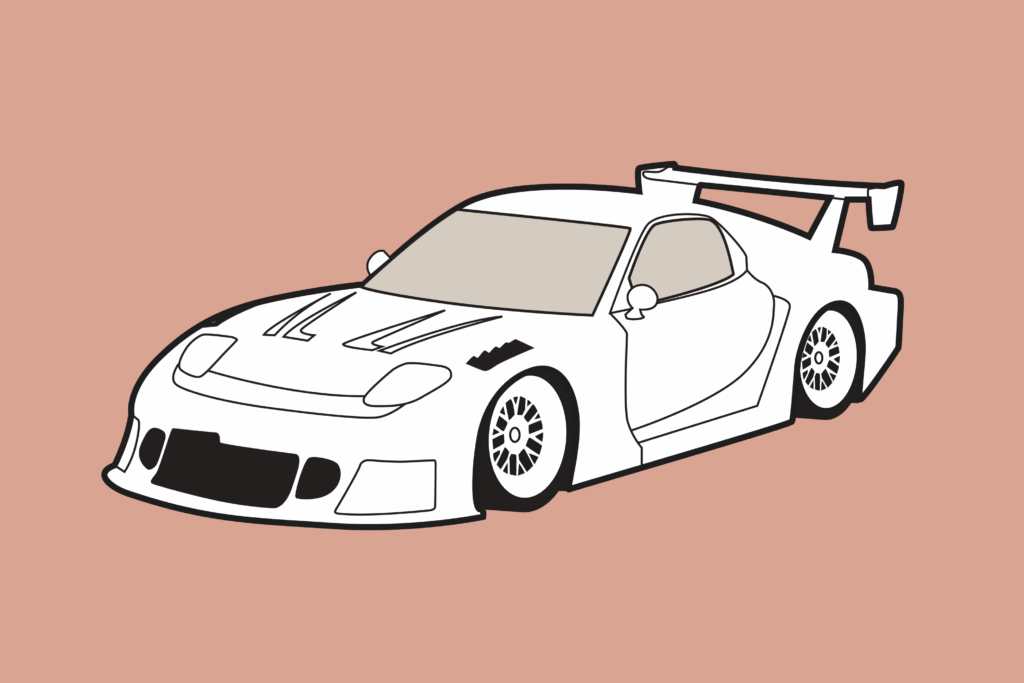
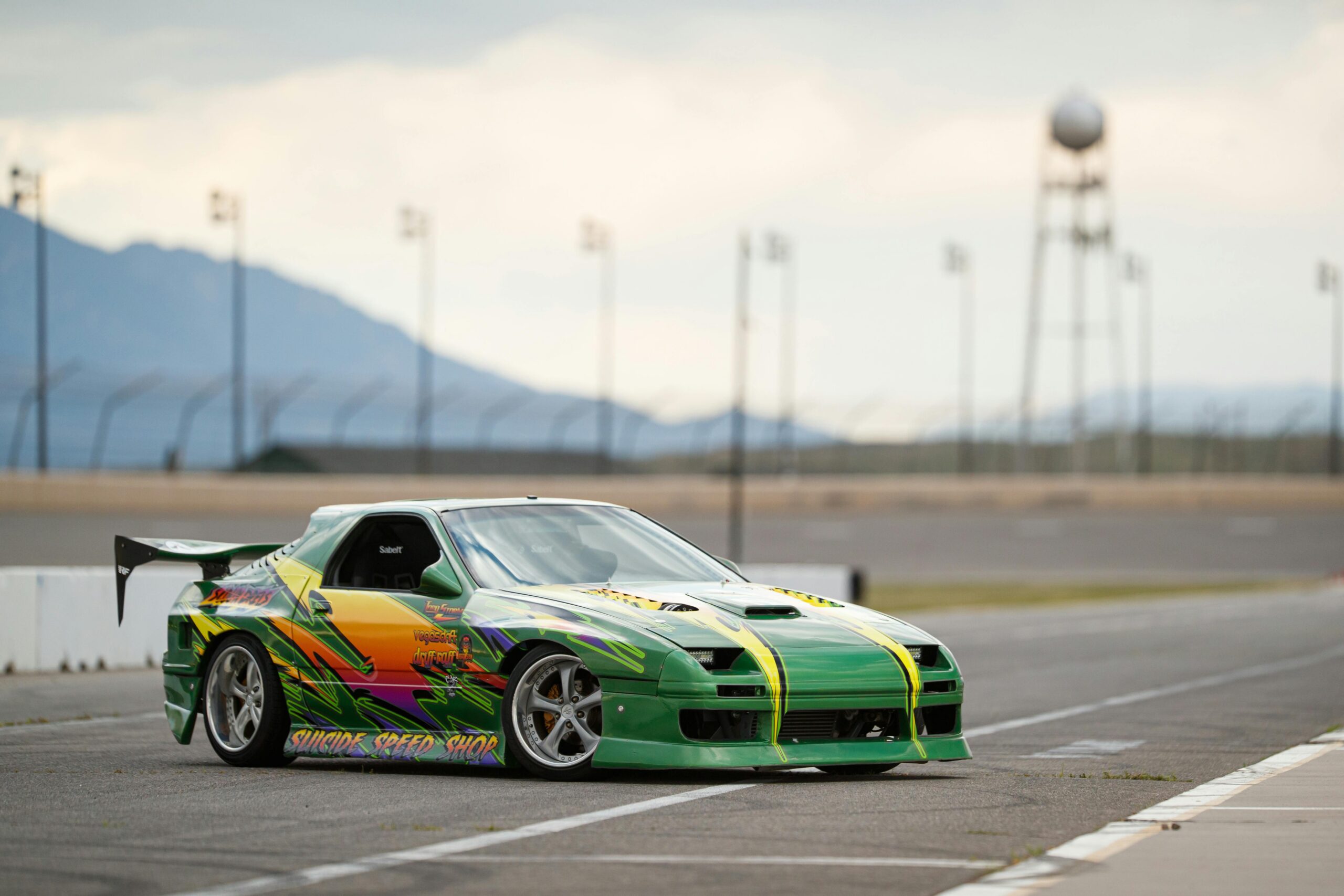
Even in standard form, the FD is a work of art, but, if you’re inclined, the FD is also one of the few cars where you can get away with heavy body mods, even on a road car. The RX-7 is unusual because, even though it’s not the 2000s anymore, plenty of motorsport-inspired widebody conversions are still being designed now.
The truth is that mad kits and big aero modifications have been popular on the FD for decades now, and there’s plenty out there from big names such as Rocket Bunny, RE-Amemiya and Liberty Walk. Unlike many other Japanese cars, this sort of style is fitting and has very much stayed in fashion for Mazda’s little coupe.
Of course, plenty of purists prefer an OEM look using upgrades like ’99-spec’ (Series 8) bumpers and possibly a few minor tweaks such as a simple lip kit or carbon fibre mirrors. But the point is that the FD will always be a cool car, so we’d say do your own thing and you won’t be disappointed. If you’re looking for a UK-based hub for high-end styling and aero accessories, Tarmac Sportz is an excellent place to source individual components.
Learn more about the Mazda RX-7 FD
So, that’s exactly where we’d start looking when it comes to modifying Mazda’s legendary rotary-powered coupe. But, if you haven’t got one on your drive just yet, or you’d just like to know more, check out everything you need to know in our Mazda RX-7 FD buying guide.